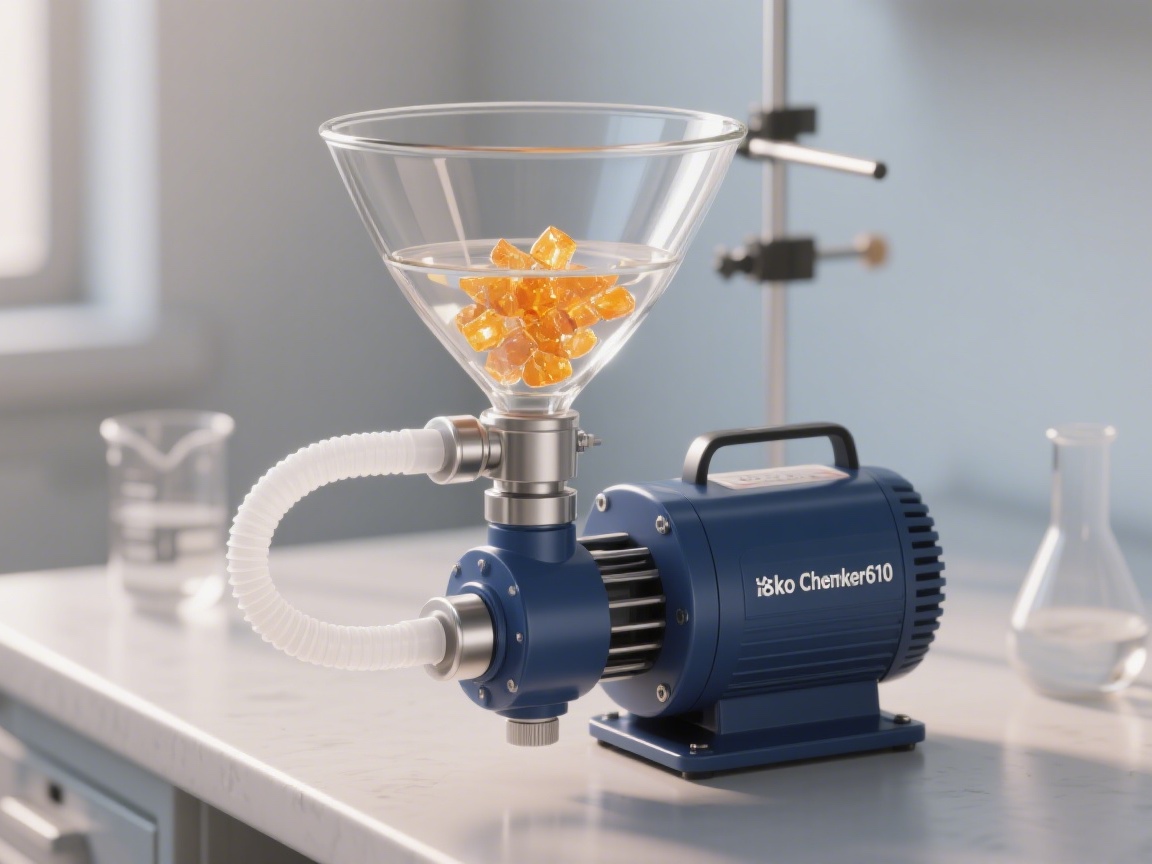
7 Key Applications of Laboratory Vacuum Pumps: From Filtration to Mass Spectrometry
What Is a Laboratory Vacuum Pump?
A laboratory vacuum pump is a device designed to remove air and gases from a sealed system to create a controlled low-pressure environment. Laboratory vacuum pumps are widely used in pharmaceutical research, biotechnology, chemical synthesis, environmental testing, and materials science.
By reducing pressure, vacuum pumps help accelerate filtration, lower solvent boiling points, improve analytical accuracy, and protect sensitive samples from contamination.
Why Are Laboratory Vacuum Pumps Important?
Modern laboratories rely on vacuum technology to:
Speed up experimental workflows
Improve sample recovery rates
Reduce thermal degradation of sensitive compounds
Enhance analytical instrument performance
Maintain contamination-free environments
Without a reliable laboratory vacuum pump, many critical laboratory procedures would become inefficient or impossible.
1. Vacuum Filtration
Vacuum filtration is one of the most common applications of laboratory vacuum pumps.
By generating negative pressure beneath a filter membrane, the vacuum pump significantly accelerates liquid separation compared with gravity filtration.
Typical Applications
Chemical synthesis
Microbiological testing
Environmental analysis
Pharmaceutical sample preparation
Recommended Pump Type
Oil-free diaphragm vacuum pumps are often preferred because they eliminate the risk of oil contamination and provide excellent chemical resistance.
2. Rotary Evaporation
Rotary evaporators use vacuum pumps to lower the boiling point of solvents.
For example, ethanol that normally boils at 78°C can evaporate at much lower temperatures under vacuum conditions, reducing processing time and protecting heat-sensitive compounds.
Typical Applications
Solvent recovery
Natural product extraction
Pharmaceutical R&D
API development
Recommended Pump Type
Oil-free diaphragm pumps or rotary vane vacuum pumps depending on the required vacuum level.
3. Freeze Drying (Lyophilization)
Freeze drying is essential for preserving biological samples, vaccines, proteins, and pharmaceutical products.
The vacuum pump removes water vapor generated during sublimation while maintaining stable low-pressure conditions.
Benefits
Long-term sample preservation
Improved product stability
Reduced degradation
Common Industries
Biotechnology
Vaccine manufacturing
Pharmaceutical research
4. Cell Culture and Biosafety Cabinets
Vacuum systems help maintain controlled airflow and negative pressure environments in biosafety cabinets.
This prevents harmful aerosols from escaping and protects laboratory personnel and sensitive cell cultures.
Applications
Stem cell research
Microbiology laboratories
Clinical diagnostics
5. Scanning Electron Microscopy (SEM)
SEM instruments require high-vacuum environments to minimize collisions between electrons and gas molecules.
A stable vacuum allows researchers to obtain high-resolution images of microscopic structures.
Applications
Nanomaterials
Semiconductor inspection
Surface morphology analysis
Recommended Pump Type
Turbomolecular vacuum pumps combined with backing pumps.
6. Mass Spectrometry
Mass spectrometers depend on vacuum systems to ensure ions travel without interference.
Insufficient vacuum can reduce sensitivity and measurement accuracy.
Applications
Pharmaceutical analysis
Food safety testing
Environmental monitoring
Clinical laboratories
7. Thin Film Deposition and Surface Analysis
Vacuum technology plays a crucial role in coating and thin-film manufacturing processes.
High-vacuum conditions help prevent contamination and improve film uniformity.
Applications
Semiconductor production
Solar cells
Optical coatings
Advanced materials research
How to Choose the Right Laboratory Vacuum Pump
Selecting the right laboratory vacuum pump depends on three key factors:
1. Ultimate Vacuum Level
Different applications require different vacuum levels.
Application
Typical Vacuum Requirement
Vacuum Filtration
Low Vacuum
Rotary Evaporation
Medium Vacuum
Freeze Drying
High Vacuum
Mass Spectrometry
High Vacuum
SEM
Ultra-High Vacuum
2. Chemical Compatibility
If corrosive solvents or acids are involved, chemically resistant pumps should be selected.
3. Contamination Requirements
For pharmaceutical and biological applications, oil-free vacuum pumps are generally preferred.
Frequently Asked Questions
What is the most common laboratory vacuum pump application?
Vacuum filtration and rotary evaporation are among the most frequently used laboratory vacuum pump applications.
Are oil-free vacuum pumps better for laboratories?
In most pharmaceutical, biotechnology, and analytical laboratories, oil-free vacuum pumps are preferred because they eliminate oil contamination risks.
Which vacuum pump is best for a rotary evaporator?
Oil-free diaphragm pumps are commonly used for routine solvent evaporation, while rotary vane pumps are suitable for deeper vacuum requirements.
Conclusion
Laboratory vacuum pumps are essential tools across chemical, pharmaceutical, biological, and materials science laboratories. From vacuum filtration and rotary evaporation to freeze drying, SEM, and mass spectrometry, selecting the correct vacuum pump directly impacts experimental efficiency, accuracy, and reliability.
Understanding the specific vacuum requirements of each application allows laboratories to choose the most effective and cost-efficient vacuum solution for their research and production needs.
June 9, 2026
1517
 EN
EN RU
RU


 Industry News
 CPHI & PMEC Shenzhen 2026 Successfully Concludes: Connecting, Collaborating and Moving Forward

 Current Affairs








 IPv6 network supported