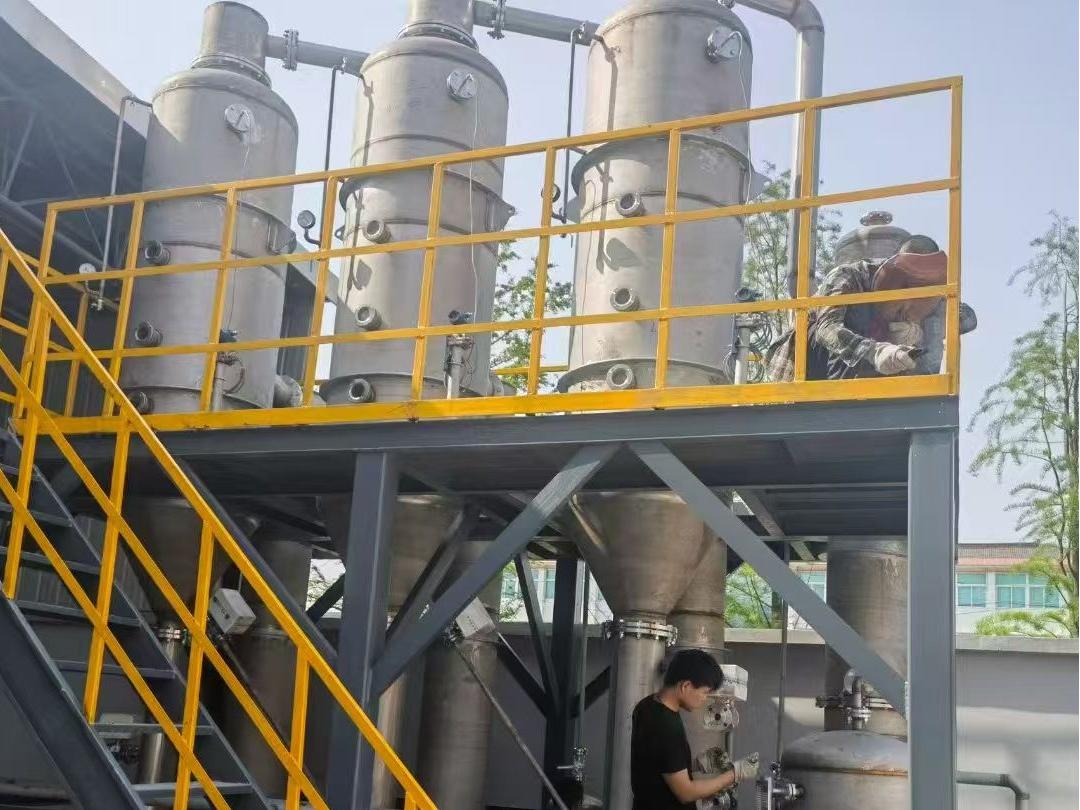
Double-Effect Forced Circulation Crystallization Evaporator: Working Principle, Applications & How to Reduce Steam Cost by 40%
Q1: What Is the Working Principle of a Double-Effect Forced Circulation Crystallization Evaporator?
Quick Answer: A double-effect forced circulation crystallization evaporator improves energy efficiency by reusing vapor heat, ensures stable operation through forced liquid movement, and enables precise crystal formation under controlled supersaturation conditions.
The working principle can be summarized into three core elements: double-effect evaporation, forced circulation, and controlled crystallization.
1. Double-Effect Evaporation
A double-effect system consists of:
A first-effect evaporator heated by live steam
A second-effect evaporator heated by the secondary vapor generated from the first effect
Why it matters: By reusing secondary vapor as a heat source, steam consumption can typically be reduced by 30–40%, making it a cost-efficient upgrade for plants facing rising energy costs or ZLD compliance pressure.
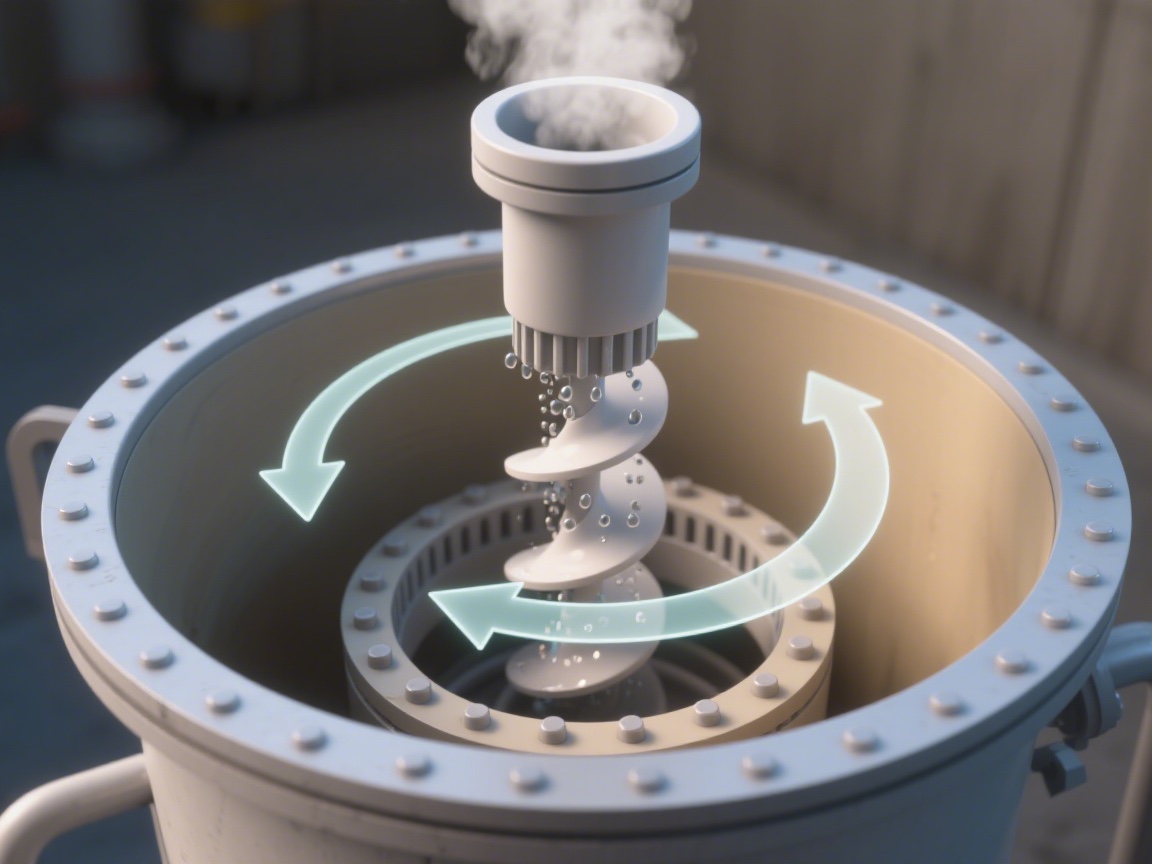
2. Forced Circulation
A high-capacity circulation pump continuously moves the process liquid between the heater and the crystallization chamber. This design:
Prevents crystal deposition inside heat exchanger tubes
Maintains stable heat transfer performance
Handles high-viscosity, high-salinity, and scaling-prone solutions effectively
Key advantage: Compared with natural circulation systems, forced circulation significantly reduces fouling risks and extends equipment runtime between cleaning cycles.
3. Crystallization Control
Under controlled temperature and supersaturation conditions:
Solutes precipitate and form crystals
Crystals are separated from the mother liquor
The mother liquor can be recycled or discharged
Engineering insight: Stable supersaturation control is the core factor determining crystal size distribution and downstream separation efficiency.
This explains why double-effect forced circulation evaporators are widely used in ZLD (Zero Liquid Discharge) systems, where both efficiency and solid recovery are critical.
Q2: What Materials and Industries Is It Suitable For?
Not every evaporation scenario requires forced circulation — but for high-risk fouling systems, it is often the preferred solution.
A double-effect forced circulation crystallization evaporator performs exceptionally well in the following applications:
Typical Materials
High-salinity wastewater (e.g., NaCl, Na₂SO₄, NH₄Cl)
Chemical mother liquors and by-product salts
Pharmaceutical intermediate crystallization solutions
Battery material-related inorganic salt solutions
Metal surface treatment wastewater
Common Application Industries
Chemical and fine chemical processing
Lithium battery and new energy materials
Pharmaceutical and API manufacturing
Environmental engineering (ZLD / MVR systems)
Food processing and salt production
Decision guideline: If your process involves:
Severe scaling tendencies
High boiling point elevation (BPE)
High solid or slurry content
→ A forced circulation evaporator is generally more stable and predictable than natural circulation designs.
Q3: What Types of Double-Effect Forced Circulation Crystallization Evaporators Are Common?
Choosing the wrong configuration often leads to long-term inefficiency — not immediate failure.
1. Vertical Forced Circulation Type
Compact footprint
Easy integration with crystallizers and centrifuges
Suitable for continuous medium-to-large-scale production
2. External Circulation Crystallizer Type
Independent crystallizer design
Better control of crystal size distribution
Ideal for applications requiring consistent product quality (e.g., pharma or battery salts)
3. Integrated Double-Effect System
Evaporation, crystallization, and separation in one system
High automation level
Reduces installation time and engineering complexity
Selection logic (critical for buyers):
Treatment capacity
Material properties (viscosity, scaling tendency, solubility)
Operation mode (continuous vs batch)
Downstream separation method
→ A system-level design evaluation is more important than single equipment specifications.
Q4: What Pump Is Used to Connect the Distilled Water Tank?
This is a small component — but poor selection can affect system stability and maintenance frequency.
In most systems, the pump connecting the distilled water tank is one of the following:
Common Pump Types
Centrifugal Pump
Suitable for low-viscosity distilled water
Stable and cost-effective
Most commonly used option in industrial systems
Stainless Steel Sanitary Pump
Used in pharmaceutical or food-grade applications
Meets strict hygiene standards
Key Selection Factors
Operating temperature
Flow rate and head requirements
Need for variable frequency control
Continuous operation reliability
Important distinction: This pump is NOT the same as the forced circulation pump — the two differ significantly in design, flow rate, and duty requirements.
Q5: What Are the Common Faults of a Double-Effect Forced Circulation Crystallization Evaporator?
Understanding common failures helps reduce downtime and improve ROI.
1. Reduced Heat Transfer Efficiency
Causes
Scaling inside heat exchanger tubes
Insufficient circulation flow
Solutions
Optimize CIP intervals
Check circulation pump performance
2. Unstable Crystal Size
Causes
Poor supersaturation control
Residence time fluctuation
Solutions
Adjust evaporation load
Optimize crystallizer parameters
3. High Energy Consumption
Causes
Poor secondary vapor utilization
Heat loss
Solutions
Improve thermal integration
Optimize condenser performance
4. Circulation Pump Vibration
Causes
Crystal ingress
Pipeline resistance fluctuation
Solutions
Improve separation design
Optimize pump inlet conditions
How to Decide If This Evaporator Is Right for Your Project?
Quick self-check before contacting suppliers:
Are you currently using a single-effect evaporator with high steam cost?
Are you facing frequent scaling and shutdowns?
Do you need stable crystal quality for downstream separation?
If your answer is YES to two or more, this system is likely a strong candidate.
Practical tip: In real projects, the biggest performance gap does not come from the “double-effect” concept itself, but from:
Circulation pump design
Crystallizer configuration
Automation and control strategy
Always evaluate suppliers based on system engineering capability, not just equipment pricing.
Disclaimer: This website respects intellectual property rights. If any infringement is found, please contact this website in a timely manner for handling.
April 25, 2026
1470
 EN
EN RU
RU


 Industry News
 CPHI & PMEC Shenzhen 2026 Successfully Concludes: Connecting, Collaborating and Moving Forward

 Current Affairs













 IPv6 network supported