EN
EN RU
RU

 Industry News
 How Should Global Buyers Evaluate Chinese Manufacturers?
2026-09-11
2026-09-09
2026-09-02
2026-08-28
2026-07-13
2026-04-29

 Current Affairs
Working with acids, organic solvents, toxic reagents, or volatile chemicals always carries one unavoidable risk—hazardous airborne contaminants.
Poor laboratory ventilation can lead to:
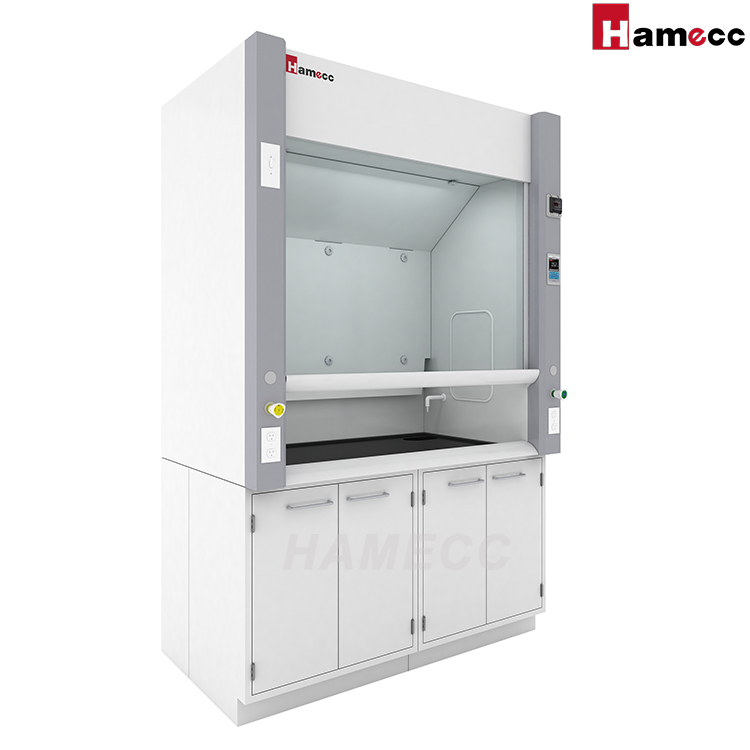
A properly designed chemical fume hood is one of the most effective engineering controls for protecting laboratory personnel while maintaining a safe working environment.
This guide answers the most common questions about laboratory fume hoods and explains how the SK Series Laboratory Fume Hood helps laboratories improve containment, airflow performance, and operational safety.
A laboratory fume hood is a ventilated enclosure designed to capture, contain, and safely exhaust hazardous fumes, vapors, aerosols, and airborne particles generated during laboratory work.
Unlike general room ventilation, a fume hood removes contaminants directly at their source before they can enter the laboratory environment.
Laboratory fume hoods are widely used in:
Their primary objective is simple:
Protect laboratory personnel while maintaining a clean and compliant workspace.
The SK Series uses a carefully engineered airflow system to continuously remove hazardous contaminants from the working chamber.
The operating process includes:
Unlike basic exhaust cabinets, the SK Series incorporates an optimized internal airflow distribution system, which minimizes turbulence and improves contaminant capture efficiency.
The result is more stable airflow and better operator protection during routine laboratory procedures.
Many laboratory accidents are not caused by equipment failure—they are caused by poor airflow management.
Common airflow problems include:
The SK Series addresses these issues through:
These features shorten the residence time of hazardous gases inside the cabinet and improve overall containment performance.
Many standard laboratory fume hoods simply exhaust air.
The SK Series is designed to improve both containment efficiency and user experience.
Key advantages include:
The SK Series is designed, manufactured, and installed in accordance with ASHRAE 110 performance requirements, one of the industry's most recognized standards for evaluating fume hood containment performance.
This provides greater confidence that hazardous fumes remain inside the working chamber under normal operating conditions.
The integrated airflow distribution system provides:
This is particularly important when handling volatile solvents or corrosive chemicals.
Instead of concentrating airflow at a single point, the SK Series extracts contaminants across the entire work surface.
Benefits include:
Laboratory users often complain that traditional fume hoods waste valuable working space.
The SK Series features:
These design improvements maximize the usable interior workspace without increasing the external footprint.
Beyond safety, everyday usability also matters.
The SK Series incorporates several ergonomic improvements, including:
These features reduce operator fatigue and simplify routine laboratory work.
Routine maintenance is essential for maintaining fume hood performance.
The SK Series simplifies maintenance through:
These features reduce maintenance time while making inspections more efficient.
Different laboratory applications require different work surfaces.
The SK Series supports multiple options, including:
Ideal for:
Suitable for:
Offers:
Recommended for:
Selecting the correct worktop depends on the chemicals used and laboratory workflow.
Yes.
The SK Series is designed for flexible laboratory integration.
Available options include:
Compatible with:
This flexibility allows laboratories to configure the system according to specific operational requirements.
The SK Series is available in three standard widths:
| Model | Width |
|---|---|
| SK-W1200 | 1200 mm |
| SK-W1500 | 1500 mm |
| SK-W1800 | 1800 mm |
Choosing the correct model depends on:
Larger models are generally recommended for complex analytical work or multi-instrument applications.
This is one of the most frequently asked questions.
A laboratory fume hood protects people by removing hazardous chemical fumes from the workspace.
A biological safety cabinet (BSC) protects people, samples, and the environment when working with infectious biological materials through HEPA-filtered airflow.
If your laboratory handles volatile chemicals, acids, or organic solvents, a chemical fume hood is the appropriate choice. If you work with microorganisms, cell cultures, or infectious samples, a biological safety cabinet is required.
Many laboratories use both systems because they address different safety risks.
As laboratories become more automated and regulatory expectations continue to rise, users are looking beyond basic exhaust performance.
Today's laboratories need solutions that provide:
The SK Series Laboratory Fume Hood addresses these requirements through optimized airflow engineering, durable epoxy-coated steel construction, ergonomic operation, and compliance-oriented design, making it a dependable choice for chemical laboratories, pharmaceutical facilities, universities, and research institutions.
A high-performance fume hood is only one part of a safe laboratory environment. To build a fully functional and compliant laboratory, it should be integrated with compatible laboratory furniture and ventilation systems, including:
Choosing coordinated laboratory equipment helps improve safety, workflow efficiency, and long-term operational reliability while supporting modern laboratory design standards.
Our hours


Public Account



 IPv6 network supported