EN
EN RU
RU

 Industry News
 How Should Global Buyers Evaluate Chinese Manufacturers?
2026-09-11
2026-09-09
2026-09-02
2026-08-28
2026-07-13
2026-04-29

 Current Affairs
DC-IDS Sinter Plate Dust Collector: Frequently Asked Questions for Industrial Buyers
Industrial dust collection is a critical factor in production compliance, energy efficiency and workplace occupational health. Traditional baghouse dust collectors often face pain points such as short service life, unstable emission performance and frequent maintenance when handling high-concentration, humid or corrosive dust. As an innovative dust removal solution, sinter plate dust collectors are gaining wide recognition across industrial sectors. This FAQ guide breaks down the DC-IDS series sinter plate dust collector, covering its working mechanism, core advantages, application scope, technical specifications and selection criteria, to support procurement engineers and plant managers in making informed evaluation decisions.
Frequently Asked Questions
Q1: What is a DC-IDS sinter plate dust collector, and how does it work?
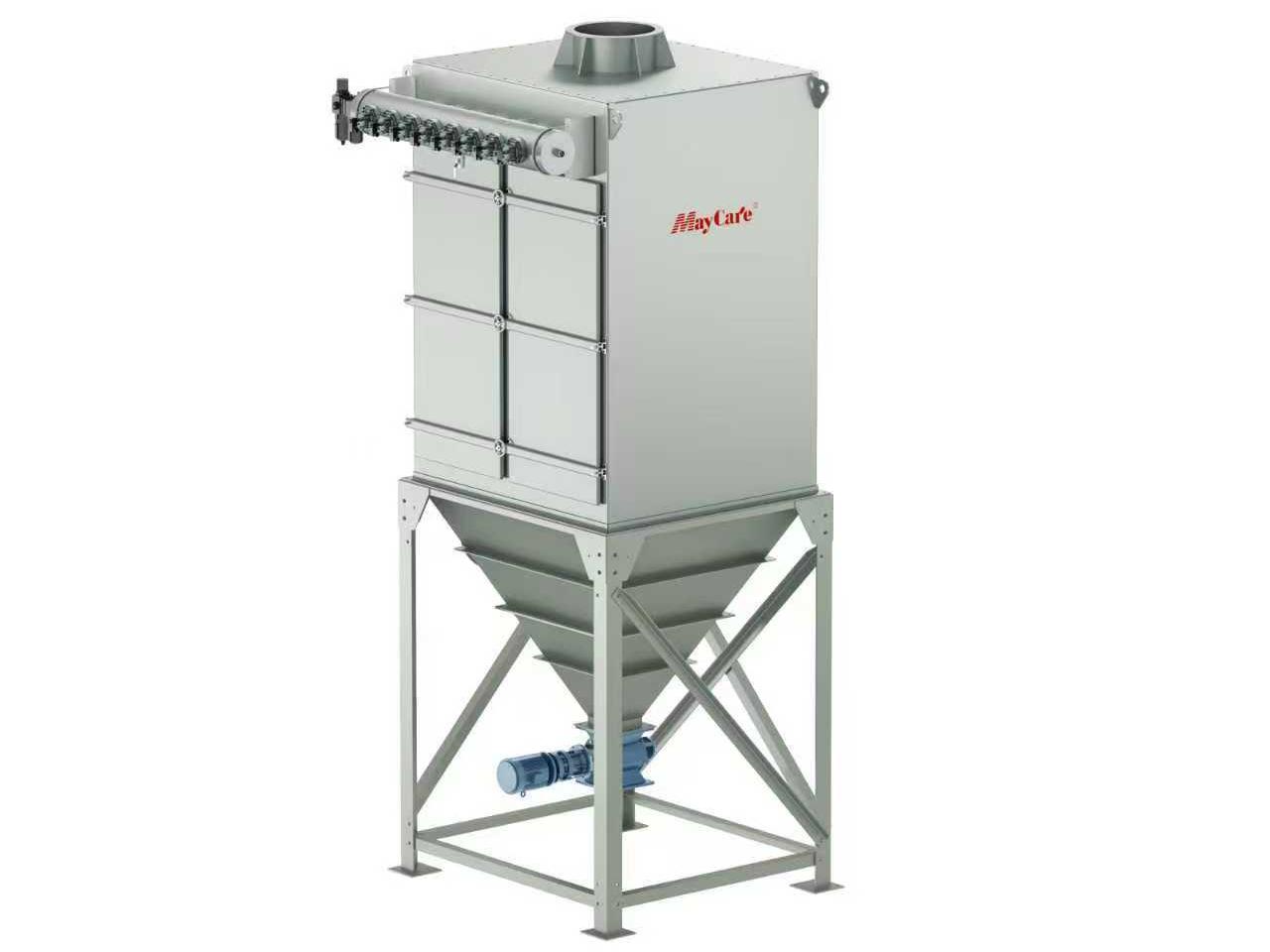
The DC-IDS sinter plate dust collector is an industrial dust removal device that uses PE sintered filter cores as its core filtering medium, representing an environmentally friendly and high-efficiency alternative to conventional bag filtration systems.
Its filter core features a rigid, wavy, multi-porous structure formed by sintering various polymer compounds. The wavy design increases the effective filtration surface area by 3 to 8 times compared with flat structures, greatly expanding filtration capacity within a compact footprint. The internal cavities of the filter core serve as flow channels for both clean air and pulse cleaning airflow.
Technically, this technology transforms the traditional deep filtration mechanism of fabric filter bags into a pure surface filtration mechanism. Dust particles are intercepted on the surface of the rigid filter medium instead of penetrating deep into the material, which is an innovative improvement in industrial dust removal technology. This surface filtration principle ensures stable filtration efficiency and consistent emission performance throughout the service life of the equipment.
Q2: What core advantages do sinter plate dust collectors offer over traditional baghouses?
The DC-IDS sinter plate dust collector delivers significant performance and operational benefits based on its rigid sintered filter medium design:
Q3: What industries and application scenarios are suitable for sinter plate dust collectors?
Thanks to its wide adaptability to different dust properties, the DC-IDS series is applied across a broad range of industrial sectors:
Q4: What standard models are available, and what are their key specifications?
The DC-IDS series includes 5 standard models to cover different airflow requirements, all designed for a recommended filtration air speed range of 0.8–1.3 m/min. The core technical specifications are as follows:
| Product Model | Filter Area (m²) | Airflow Capacity (m³/h) | Filter Air Speed (m/min) | Compressed Air Consumption (m³/min) |
|---|---|---|---|---|
| DC-IDS-750-12 | 33 | 1584–2574 | 0.8–1.3 | 0.08 |
| DC-IDS-1500-10 | 55 | 2640–4290 | 0.8–1.3 | 0.12 |
| DC-IDS-1500-16 | 88 | 4224–6864 | 0.8–1.3 | 0.24 |
| DC-IDS-1500-20 | 110 | 5280–8580 | 0.8–1.3 | 0.24 |
| DC-IDS-1500-33 | 181.5 | 8712–14157 | 0.8–1.3 | 0.53 |
Note: The above specifications apply to standard configurations. Custom configurations are available for special working conditions.
Q5: How do I select the right sinter plate dust collector model for my facility?
Model selection should be based on your actual working conditions and process requirements. Consider the following core factors:
Q6: What are the maintenance and cleaning requirements for sintered plate filter cores?
Sinter plate dust collectors have significantly lower maintenance requirements compared with traditional bag filters:
Summary
The DC-IDS sinter plate dust collector represents an upgraded solution for industrial dust removal, replacing traditional deep bag filtration with efficient surface filtration technology. It offers ultra-high filtration precision, ultra-low emission performance, long service life and low operating costs, making it suitable for a wide range of industries including lithium batteries, petrochemicals, steel, electronics and food processing.
For project-specific sizing and configuration recommendations based on your actual dust properties and working conditions, contact our technical team for a customized dust removal solution.
Disclaimer
The technical parameters, performance data and application descriptions provided in this article are based on standard product configurations for general reference only. Actual dust removal efficiency, emission concentration and service life may vary depending on specific feed dust properties, inlet concentration, operating conditions and custom configurations. For detailed project specifications and tailored solutions, please consult our professional technical personnel.
Our hours


Public Account



 IPv6 network supported