EN
EN RU
RU

 Industry News
 CPHI & PMEC Shenzhen 2026 Successfully Concludes: Connecting, Collaborating and Moving Forward
2026-09-20
2026-09-16
2026-09-11
2026-09-09
2026-09-02
2026-08-28

 Current Affairs
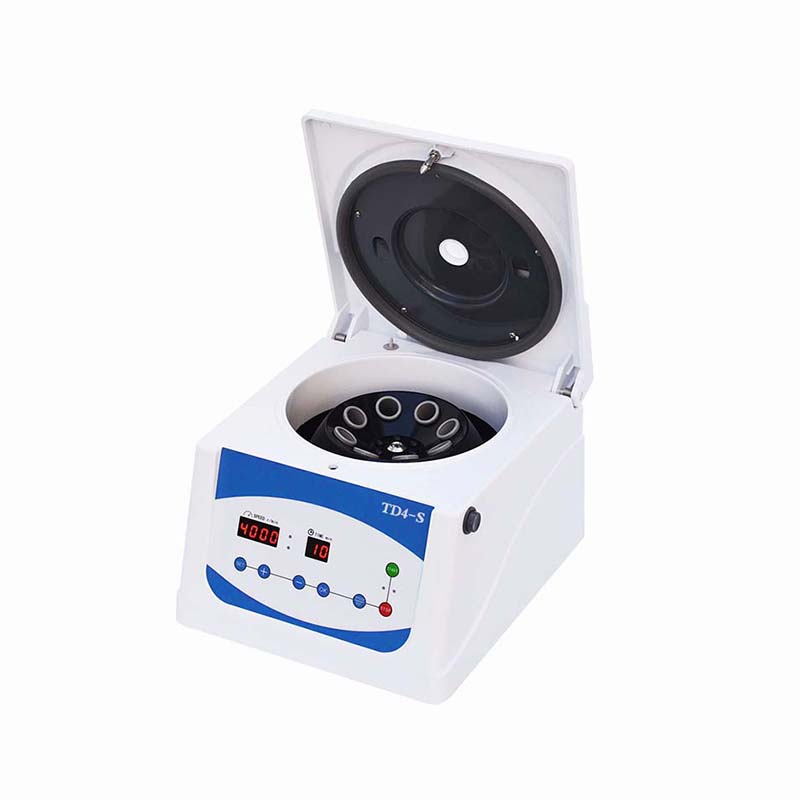
Choosing a centrifuge for the first time can be confusing. Many laboratories do not need ultra-high speed or complex refrigerated systems. For routine testing, a Desktop low-speed centrifuge (2,100×g) is often the most practical and cost-effective choice.
This guide explains everything in clear, beginner-friendly language.
Q1: What is a desktop low-speed centrifuge?
A desktop low-speed centrifuge is a compact benchtop instrument designed for routine sample separation at moderate centrifugal force. With a maximum force of 2,100×g and a speed of 4,000 r/min, it is ideal for daily clinical and biochemical testing.
This type of centrifuge is widely used as a benchtop low speed centrifuge in hospitals, diagnostic labs, and teaching laboratories.
Q2: What does “2,100×g” mean, and is it enough?
“×g” indicates how strongly samples are separated compared to gravity.
A desktop low speed centrifuge 2100 g provides sufficient force for:
For these applications, higher speed does not improve results and may damage samples.
Q3: What kind of samples and tubes can this centrifuge handle?
This centrifuge supports adaptive rotors and tube adapters, allowing it to handle multiple tube types:
This flexibility makes it especially suitable as a centrifuge for blood sample preparation and routine clinical workflows.
Q4: Is it safe and easy to operate for beginners?
Yes. This model is designed for daily use with minimal training:
With a noise level of only 55 dB(A), it is comfortable for continuous operation in a low speed centrifuge for hospital lab environment.
Q5: What are the main technical advantages?
Key specifications include:
Its small footprint makes it ideal for crowded laboratory benches.
Q6: Who should buy this type of centrifuge?
You should consider this model if you are:
If your goal is efficiency, safety, and ease of use, it is a smart choice to buy desktop low speed centrifuge models in this category.
Final Summary
A Desktop low-speed centrifuge (2,100×g) offers the perfect balance between performance, safety, and affordability. With adaptive rotors, quiet operation, and simple digital control, it meets the real needs of routine laboratory work without unnecessary complexity.
Our hours


Public Account



 IPv6 network supported