EN
EN RU
RU

 Industry News
 How Should Global Buyers Evaluate Chinese Manufacturers?
2026-09-11
2026-09-09
2026-09-02
2026-08-28
2026-07-13
2026-04-29

 Current Affairs
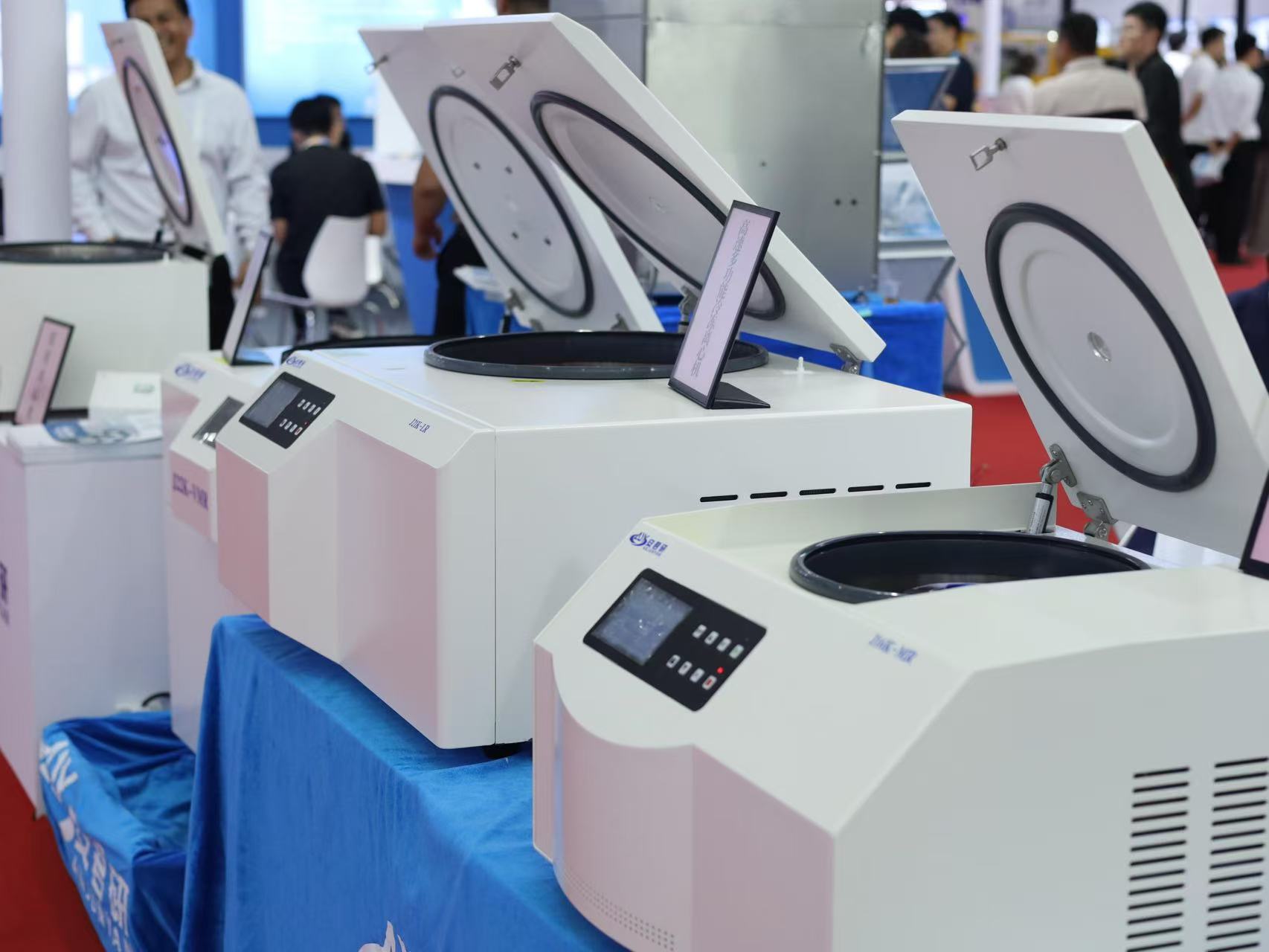
A high-speed centrifuge is a laboratory instrument designed to separate substances of different densities by generating powerful centrifugal force through rapid rotor rotation.
Compared with conventional laboratory centrifuges, high-speed centrifuges typically operate between 10,000 and 30,000 rpm, allowing researchers to efficiently isolate cells, proteins, nucleic acids, blood components, and other biological materials.
Modern desktop high-speed centrifuges can achieve rotational speeds of up to 21,000 rpm and centrifugal forces exceeding 30,000 × g, making them essential equipment in life science, biotechnology, pharmaceutical, and clinical laboratories.
The operating principle is based on centrifugal force.
When the rotor spins at high speed, particles with higher density move outward more rapidly than lighter components.
This process allows:
The effectiveness of separation depends on several factors:
Among these factors, RCF is generally more important than RPM because it represents the actual force applied to the sample.
Many laboratory buyers focus only on rotational speed.
However, RPM alone does not determine separation performance.
RCF (Relative Centrifugal Force) measures the actual force generated on the sample and is calculated based on both rotor radius and rotational speed.
For example:
| Parameter | Typical High-Speed Centrifuge |
|---|---|
| Maximum Speed | 16,500–21,000 rpm |
| Maximum RCF | 20,124–32,540 × g |
| Speed Accuracy | ±10 to ±20 rpm |
A centrifuge operating at 21,000 rpm with a larger rotor radius can produce significantly greater centrifugal force than another unit with the same speed but a smaller rotor.
Therefore, laboratories should evaluate both RPM and RCF when selecting equipment.
High-speed centrifuges are extensively used for:
Fast and efficient separation helps improve experimental reproducibility and throughput.
Clinical laboratories frequently use high-speed centrifuges for:
Reliable speed control ensures consistent testing results.
Biopharmaceutical facilities utilize high-speed centrifuges for:
High centrifugal force significantly improves separation efficiency while maintaining sample integrity.
Applications include:
Different applications require different speed ranges.
| Application | Recommended Speed |
| Blood Separation | 4,000–10,000 rpm |
| Cell Harvesting | 10,000–15,000 rpm |
| DNA/RNA Extraction | 15,000–21,000 rpm |
| Protein Purification | 18,000–21,000 rpm |
For laboratories handling diverse sample types, a 21,000 rpm model offers greater flexibility.
High-performance laboratory centrifuges can generate more than 30,000 × g, enabling efficient separation of small biological particles.
The higher the RCF, the faster the sedimentation process.
Capacity requirements vary significantly between laboratories.
Common configurations include:
Laboratories processing larger batch volumes should consider large-capacity high-speed centrifuges that combine high-speed operation with increased sample throughput.
Low noise operation improves laboratory comfort and equipment stability.
Modern centrifuges utilize:
Many advanced desktop models maintain operating noise below 60 dB.
Essential safety features include:
These features help protect both operators and valuable samples.
Advantages:
Best for:
Advantages:
Best for:
Many buyers make purchasing decisions based solely on maximum speed.
This can lead to equipment that fails to meet actual laboratory requirements.
Avoid these common mistakes:
A comprehensive evaluation often results in lower long-term operating costs and higher laboratory efficiency.
Proper maintenance can significantly extend service life.
Recommended practices:
Routine maintenance helps ensure accurate and reproducible experimental results.
A high-speed centrifuge is one of the most important instruments in modern laboratories. Whether performing DNA extraction, blood separation, protein purification, or biopharmaceutical research, selecting the right centrifuge directly impacts workflow efficiency and data quality.
When evaluating available options, laboratories should consider maximum speed, RCF, rotor compatibility, capacity, noise levels, and safety systems rather than focusing on a single specification.
For laboratories seeking versatile solutions, modern desktop and large-capacity high-speed centrifuges provide an effective balance of performance, precision, and operational flexibility.
Learn more about available High-Speed Centrifuge models and compare specifications based on your laboratory requirements.
Our hours


Public Account



 IPv6 network supported