EN
EN RU
RU

 Industry News
 How Should Global Buyers Evaluate Chinese Manufacturers?
2026-09-11
2026-09-09
2026-09-02
2026-08-28
2026-07-13
2026-04-29

 Current Affairs
A practical system should address five key areas: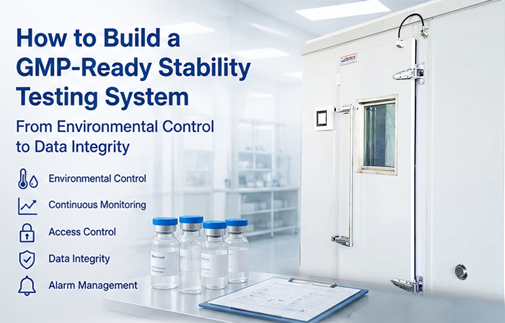
1.Environmental control
Temperature and humidity must remain within defined test conditions. Chamber capacity, airflow, insulation and refrigeration performance should match the intended application.
2. Continuous monitoring
Temperature and humidity trends should be monitored throughout the study rather than relying only on periodic manual checks. FDA inspection guidance highlights the importance of stability records and data associated with chamber monitoring.
3. Access control
Different users may have different responsibilities. User permissions can help reduce the risk of unauthorized changes to critical settings or records.
4. Data integrity and traceability
Electronic records should remain accurate, complete and retrievable throughout their lifecycle. EMA guidance emphasizes controls over data generation, processing, review, storage and retrieval, as well as traceability of changes.
5. Alarm and event management
A deviation should not simply disappear from the record. Alarm events and relevant changes should be visible for investigation and review.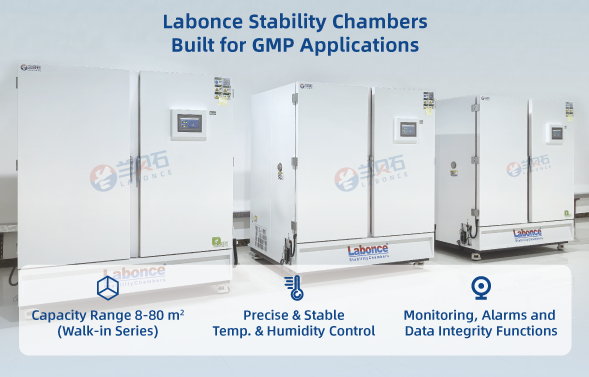
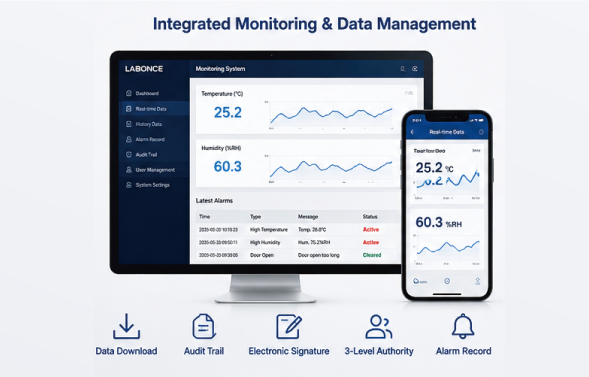
A modern stability chamber can integrate environmental control with data-management functions. Labonce stability chambers can be configured with a monitoring interface, temperature and humidity curves, electronic signatures, data download, three-level authority, audit trails and alarm records.
For larger stability programs, Labonce walk-in chambers range from 8 to 80 m³ and support customized dimensions, providing a scalable option for facilities with higher sample volumes.
The goal is not simply to purchase a “GMP chamber,” but to establish a controlled stability testing workflow in which environmental conditions, user actions, alarms and records can be managed and reviewed.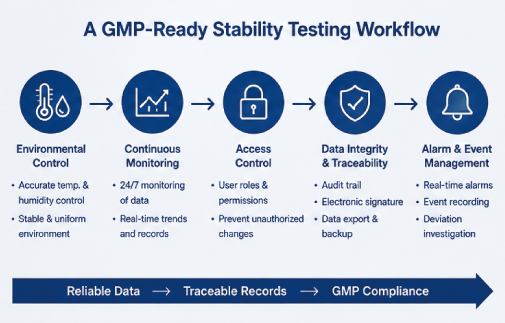
Before selecting a system, ask:
· What temperature and humidity range is required?
· How much testing capacity is needed?
· How are temperature and humidity data recorded?
· Are user permissions configurable?
· Is an audit trail available?
· How are alarms recorded and reviewed?
· Can data be exported for further analysis?
· How will the system be validated within the site’s quality system?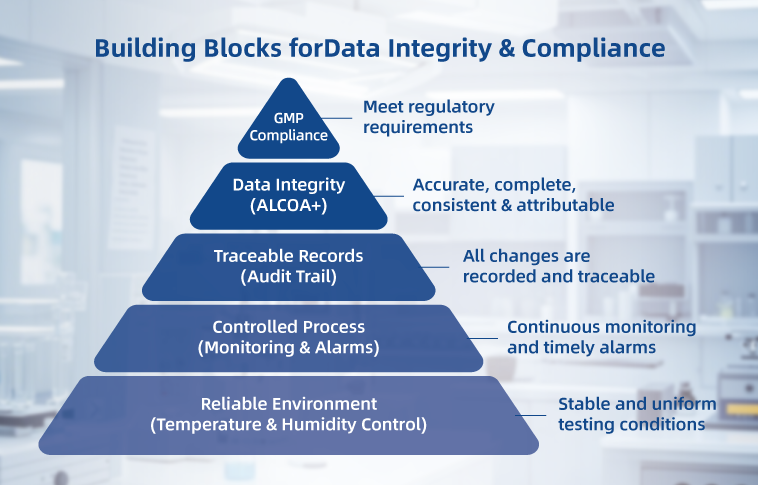
Note: ICH Q1 is currently undergoing revision. The 2025 Step 2 document is a draft for public consultation and should not be treated as the final guideline.
Our hours


Public Account



 IPv6 network supported