EN
EN RU
RU

 Industry News
 CPHI & PMEC Shenzhen 2026 Successfully Concludes: Connecting, Collaborating and Moving Forward
2026-09-20
2026-09-16
2026-09-11
2026-09-09
2026-09-02
2026-08-28

 Current Affairs
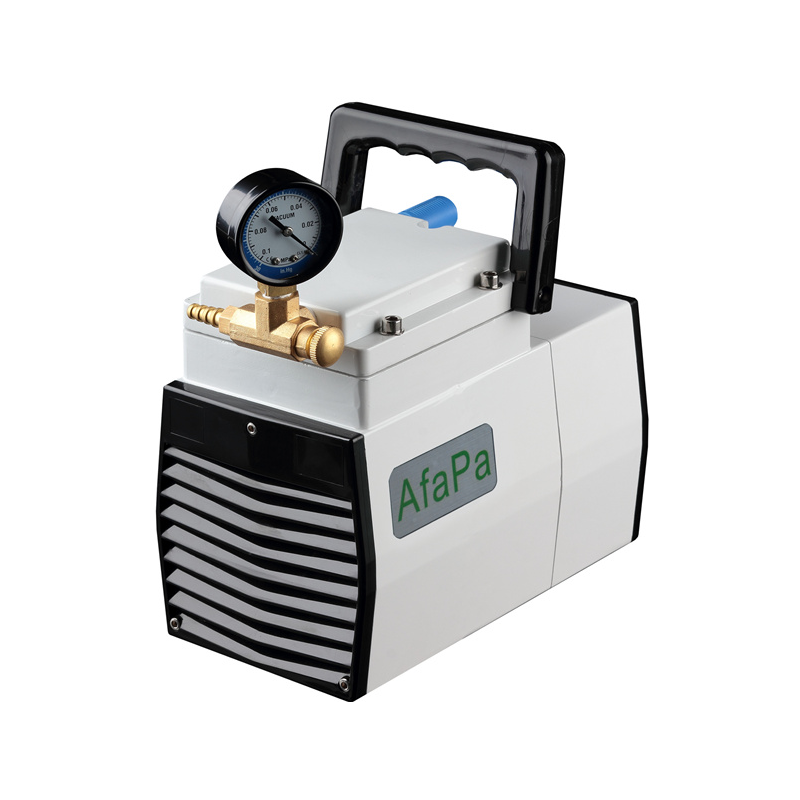
Q: How does the DIP series prevent oil back-streaming during vacuum filtration?
A: Traditional oil-sealed rotary vane pumps inevitably emit oil mist, which can contaminate cleanrooms and ruin sensitive analytical samples.
The DIP series functions entirely as an oil-free diaphragm vacuum pump. It relies on the mechanical movement of a flexible diaphragm to compress and exhaust gas. This design guarantees a 100% oil-free vacuum environment, eliminating messy maintenance, oil changes, and the risk of sample contamination.
Q: Can this pump survive harsh chemical solvents from a rotary evaporator?
A: Yes. Acidic and solvent vapors rapidly degrade standard pump components. To combat this, the DIP series is specifically engineered as an anti-corrosive PTFE diaphragm vacuum pump.
Material Advantage: The internal diaphragm is constructed from robust anti-corrosive rubber and PTFE.
Benefit: This exceptional chemical resistance ensures long-lasting durability, significantly extending the equipment's lifespan and reducing procurement replacement costs.
Q: Does the lab need separate pumps for suction and gas transfer?
A: No. Bench space is premium real estate. The DIP series offers versatile multi-functionality to save space.
Specifically, models like the DIPC2 act as a true positive and negative pressure lab pump. It draws a powerful ultimate vacuum of -85 KPa for suction tasks, while simultaneously providing up to 40 Psi of positive pressure for gas transfer.
To help procurement officers accurately size the equipment for their specific laboratory needs, here is the detailed technical performance data for the DIP series:
| Model | Pumping Speed (L/min) | Ultimate Vacuum (KPa) | Positive Pressure (Psi) | Motor Power (W) | Noise (dB) | Weight (kg) |
| DIP2 / DIPP2 | 30 | -85 (15) | — | 180 | < 50 | 7.5 |
| DIPC2 / DIPCP2 | 30 | -85 (15) | 40 | 180 | < 50 | 8 |
| DIP4 / DIPP4 | 60 | -85 (15) | 40 | 180 | < 50 | 10 |
| DIPH4 / DIPHP4 | 30 | -95 (5) | — | 180 | < 50 | 10 |
Q: Is the equipment too loud or bulky for continuous fume hood use?
A: Loud, vibrating equipment disrupts concentration. Despite delivering impressive pumping speeds up to 60 L/min (DIP4 model), the entire series acts as a remarkably low noise portable vacuum pump.
Acoustic Performance: Operates at whisper-quiet noise levels of < 50 dB.
Portability: Weighing only between 7.5 and 10 kg and equipped with a top-mounted ergonomic handle, it can be easily transported between workbenches.
If you are ready to eliminate oil maintenance, reduce operational noise, and protect your sensitive experiments from corrosive wear, it is time to buy DIP series diaphragm vacuum pump equipment. Contact our lab solutions engineering team today for technical sizing and custom B2B quotations based on the specific models listed above.
Disclaimer: This website respects intellectual property rights. If any infringement is found, please contact this website in a timely manner for handling.
Our hours


Public Account



 IPv6 network supported