EN
EN RU
RU

 Industry News
 CPHI & PMEC Shenzhen 2026 Successfully Concludes: Connecting, Collaborating and Moving Forward
2026-09-20
2026-09-16
2026-09-11
2026-09-09
2026-09-02
2026-08-28

 Current Affairs
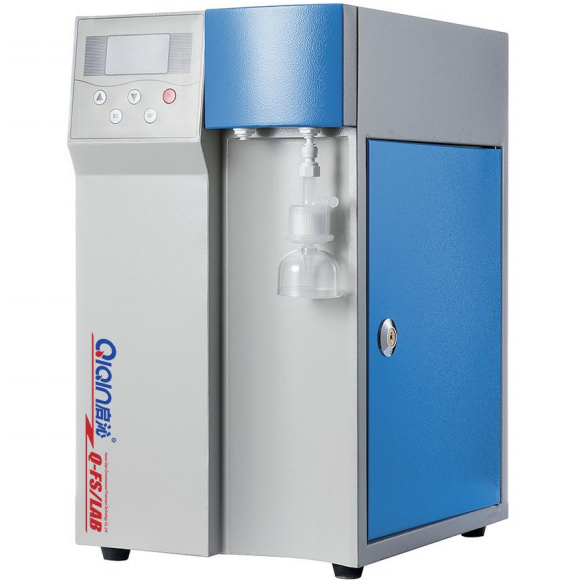
Selecting the right ultrapure water system Q-MID series is a critical decision for laboratories operating in regulated and high-sensitivity environments. From HPLC baselines drifting to ICP-MS contamination risks, water quality directly impacts experimental reliability.
This guide evaluates the Q-MID series from a buyer pain point + competitive comparison perspective—helping you determine whether it fits your application.
Before choosing a laboratory ultrapure water system, most users encounter several persistent issues:
1. Inconsistent water quality
2. Poor monitoring & visibility
3. High contamination risk
4. Maintenance inefficiency
The ultrapure water system Q-MID series is engineered to meet multiple international standards, making it suitable for regulated laboratory environments.
This positions it as a Type I ultrapure water system, suitable for high-precision analytical work.
Q-MID-DI
Q-MID-DV
Addresses visibility and maintenance planning issues
Reduces variability in sensitive experiments
Hygienic System Design
Minimizes contamination risk
Adaptable to different lab environments
The Q-MID series supports a wide range of analytical and life science applications:
Particularly suitable as an ultrapure water system for HPLC / ICP-MS, where TOC and microbial control are critical.
When comparing against typical systems in the market:
| Criteria | Q-MID Series | Typical Competitors |
| Water Quality | 18.25 MΩ·cm | Similar |
| TOC Control | ≤5–10 ppb | Often higher |
| Monitoring | Real-time display | Limited |
| Automation | Dual pump + auto cycle | Partial |
| Tank Design | Sterile integrated tank | Standard tank |
Q-MID stands out in:
You should consider the ultrapure water system Q-MID series if:
The ultrapure water system Q-MID series is not positioned as a basic purification unit—it is designed for laboratories that prioritize:
For buyers evaluating a laboratory ultrapure water system, Q-MID provides a balanced solution between performance and operational reliability.
This website respects intellectual property rights. If any infringement is found, please contact this website in a timely manner for handling. The specifications and features described in this article are strictly based on the officially provided product information. Actual performance and configuration may vary depending on installation conditions, feed water quality, and optional modules. For detailed technical confirmation, please refer to the official documentation or consult the supplier before purchase.
Our hours


Public Account



 IPv6 network supported