EN
EN RU
RU

 Industry News
 How Should Global Buyers Evaluate Chinese Manufacturers?
2026-09-11
2026-09-09
2026-09-02
2026-08-28
2026-07-13
2026-04-29

 Current Affairs
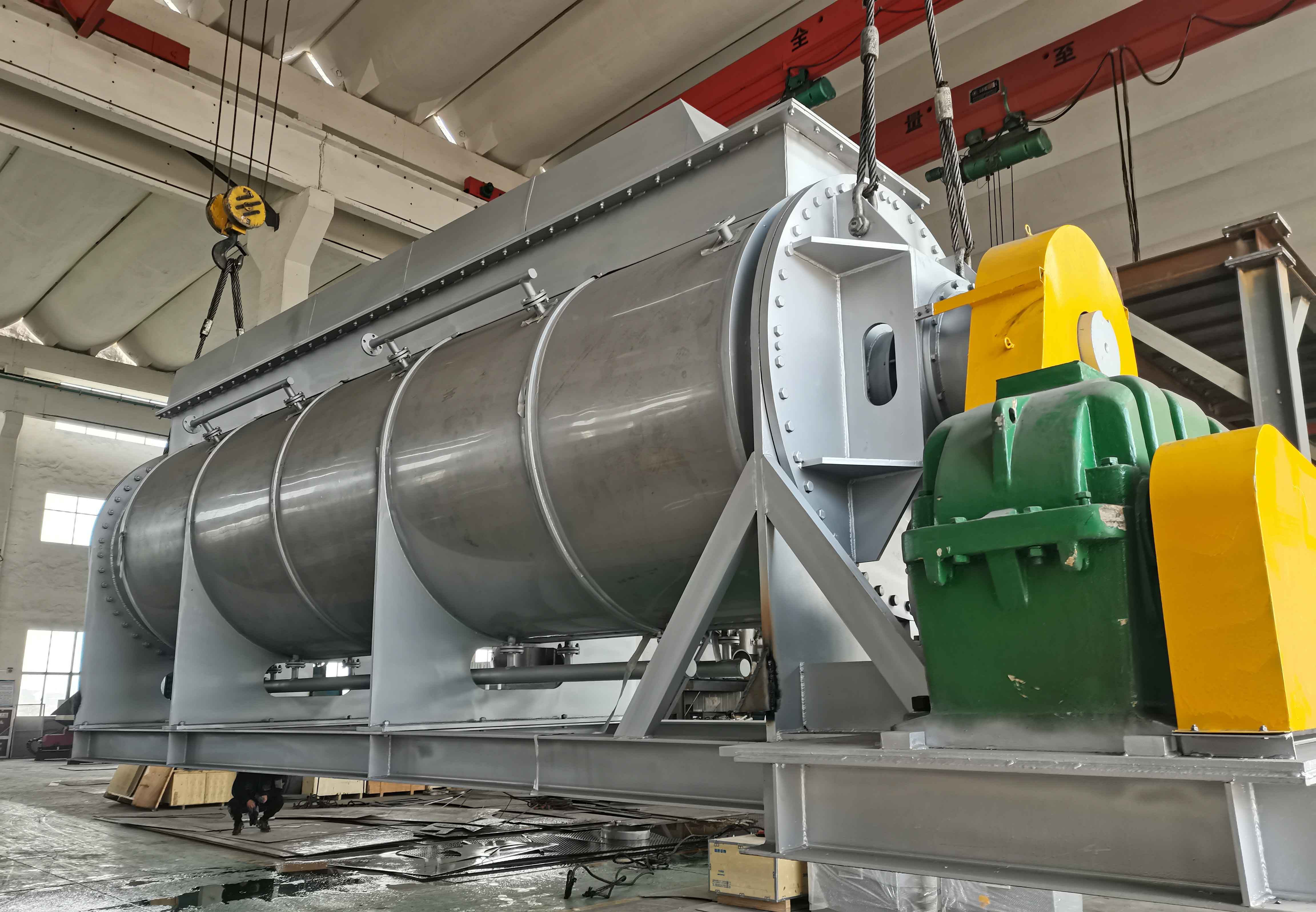
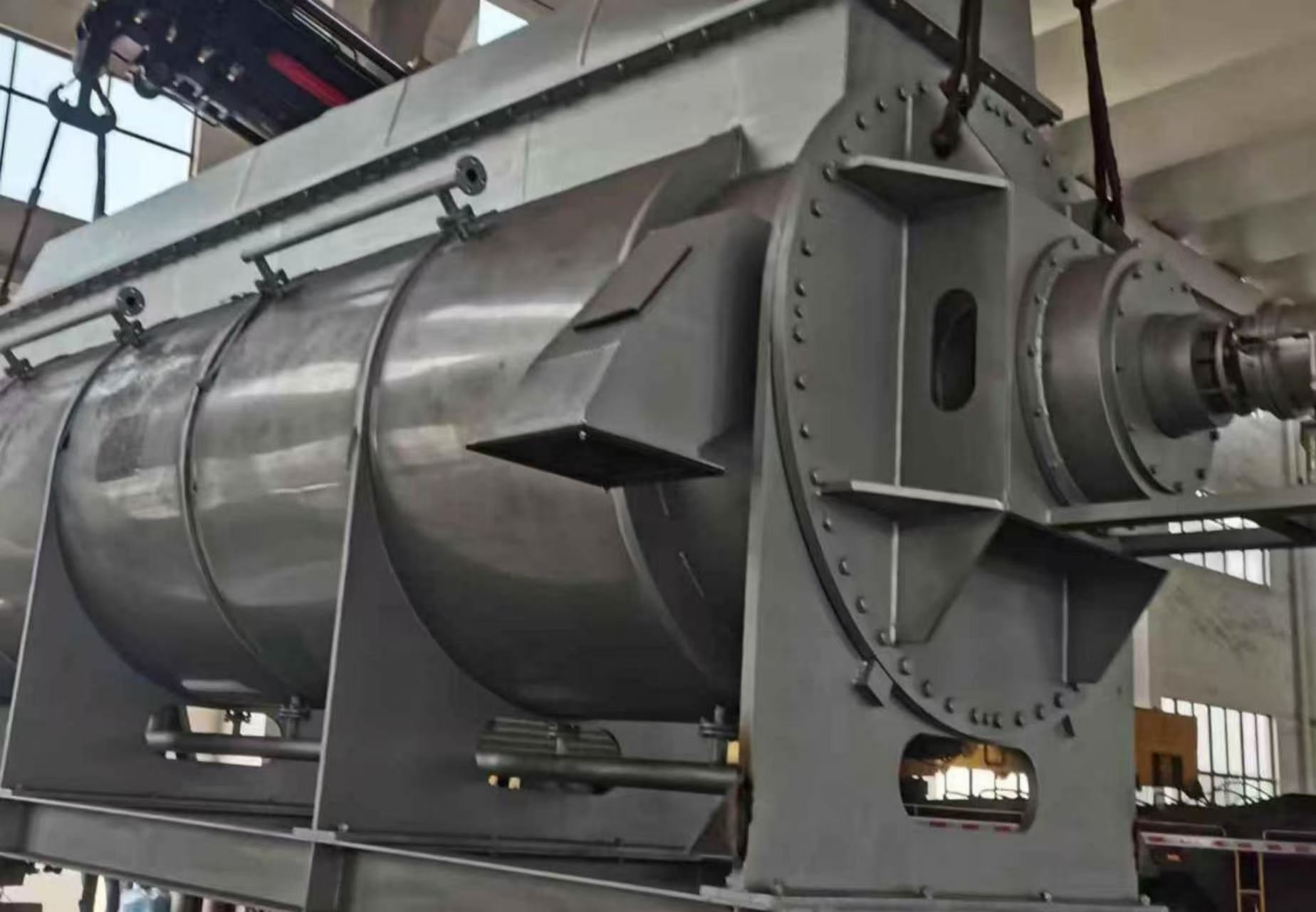
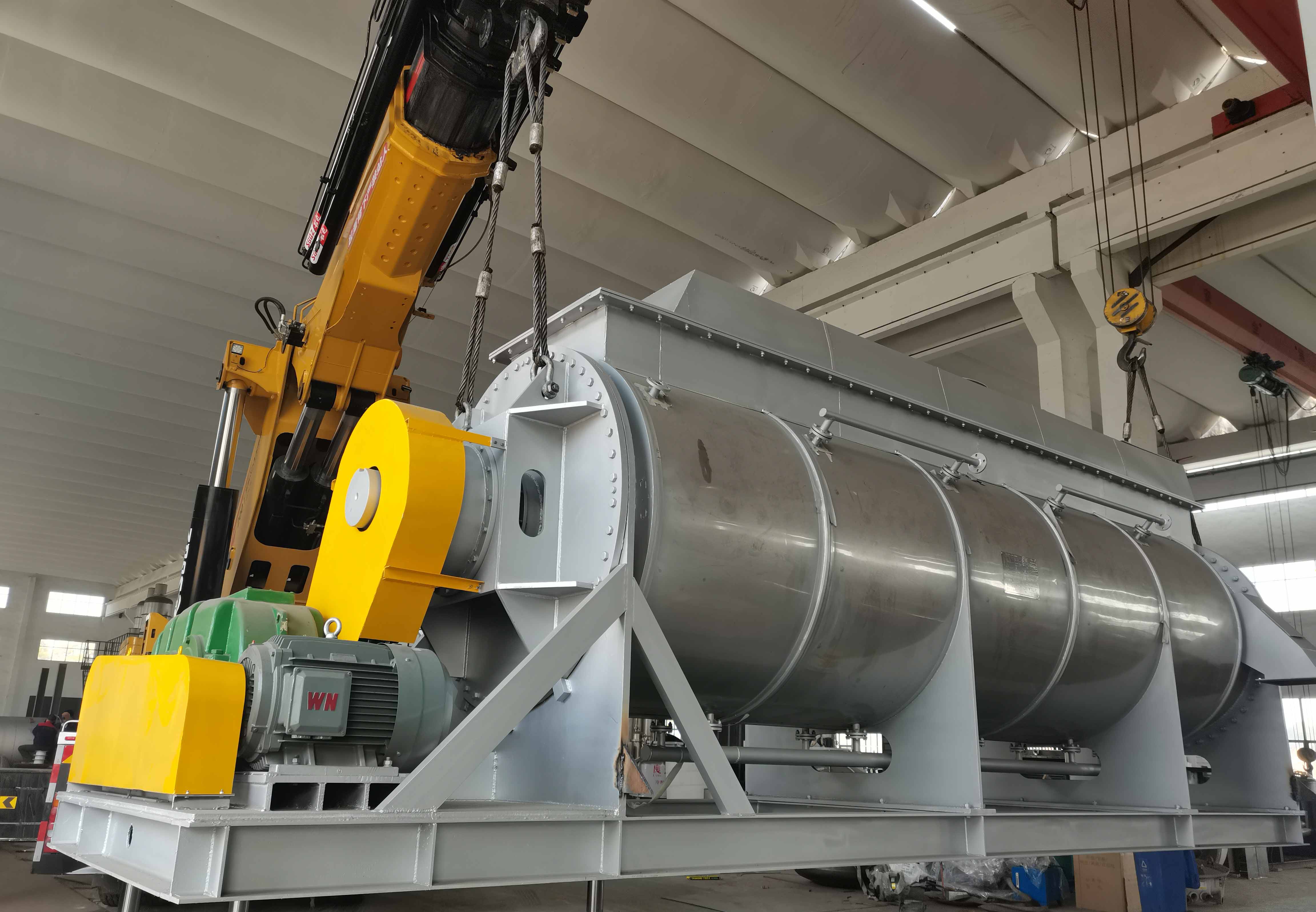
A Hollow Blade Dryer is an industrial drying machine designed to heat, dry, cool, or sterilize materials such as paste, sludge, powder, and granules using indirect heat transfer.
Instead of blowing hot air through the material, heat is transferred through hollow wedge-shaped blades, making the process more efficient and controlled.
The dryer contains several hollow stirring shafts fitted with wedge-shaped hollow blades.
A heating or cooling medium—such as steam, hot water, or heat transfer oil—flows through these blades.
Key points:
Heat medium temperature range: -40°C to 320°C
No direct contact between air and material
Heat is transferred by conduction, not convection
This makes it an indirect heating blade dryer, ideal for sensitive or hazardous materials.
Paste-like and sticky materials are difficult to dry with hot air systems.
A hollow blade dryer for sludge and paste materials solves this by:
Continuous mixing prevents material agglomeration
Large heat transfer area improves efficiency
Fully sealed structure prevents dust leakage
This is why it is widely used in chemical, pharmaceutical, and environmental industries.
The wedge-shaped blades provide two key advantages:
High heat transfer efficiency
The large surface area maximizes contact between material and heated surfaces.
Self-cleaning effect
As materials move across the blade surface, friction removes attached residue.
This self-cleaning feature reduces fouling and supports long-term operation as a self cleaning industrial dryer.
Yes.
Because there is no air carrying heat away, almost all thermal energy is used to heat the material.
Heat loss is limited to minor dissipation through the insulation layer, making it an energy efficient industrial blade dryer with significantly lower operating costs than hot air systems.
Typical applications include:
Sludge treatment plants
Chemical and pharmaceutical processing
Powder and granule drying
Low-temperature reactions and sterilization
Many plants choose it as a hollow blade dryer for chemical industry processes where safety, efficiency, and material integrity are critical.
When selecting a dryer, consider:
Material properties (moisture, viscosity, heat sensitivity)
Required operating temperature
Heating medium (steam or heat transfer oil)
Continuous or batch operation
Choosing the right Hollow Blade Dryer ensures stable performance and long-term cost savings.
Our hours


Public Account



 IPv6 network supported