EN
EN RU
RU

 Industry News
 How Should Global Buyers Evaluate Chinese Manufacturers?
2026-09-11
2026-09-09
2026-09-02
2026-08-28
2026-07-13
2026-04-29
 Current Affairs
For facility managers in mining, petrochemicals, and food processing, solid-liquid separation is the backbone of the production line. However, processing abrasive materials like drilling mud or corrosive chemicals often leads to rapid equipment deterioration, catastrophic vibration, and costly downtime.
If your facility is struggling with short equipment lifespans and inefficient extraction, upgrading your machinery is critical. Here, we answer the most pressing questions about integrating advanced LW decanter centrifuges into your heavy-duty operations.
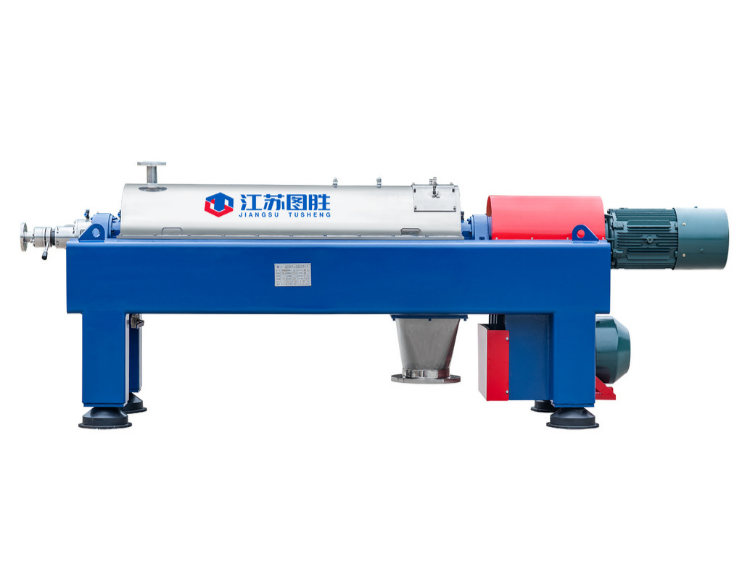
The biggest pain point in mineral classification and coal mud dewatering is the rapid erosion of the internal scroll conveyor and discharge ports. Standard carbon steel components simply cannot survive.
The LW series tackles abrasion head-on with extreme tungsten carbide wear protection. The scroll conveyor features flights that are either inlaid with tungsten carbide tiles or heavily treated with welded hard facing and spray coating. Furthermore, the bowl's inner wall is welded with high-strength wear-resistant strips, and the solid discharge port utilizes replaceable HRA89-90 tungsten carbide or ceramic bushings. This robust construction dramatically lowers maintenance costs and extends the machine's operational lifecycle.
Procurement teams need to ensure the equipment can handle massive, continuous loads without bottlenecking the plant.
Separation takes place in a horizontal bowl equipped with an internal screw unit (scroll conveyor). The process material is fed into the bowl through a stationary feed pipe and is smoothly accelerated. High centrifugal forces cause instant sedimentation of the solids on the bowl wall. The conveyor rotates in the same direction as the bowl, but a differential regulates a different speed, constantly moving the solids towards the conical end of the bowl for discharge.
Excessive vibration damages structural foundations and triggers emergency shutdowns.
The LW series utilizes a highly engineered vertical base design featuring a symmetrical arrangement of the main motor component and the auxiliary motor component. This layout, combined with dedicated shock absorbers located beneath the frame, allows the machine to be securely fixed without requiring anchor bolts. This guarantees continuous and stable running, completely mitigating structural fatigue.
Scalability is essential. Whether you are extracting delicate olive oil or handling massive volumes of sludge for industrial and municipal wastewater treatment, the LW series offers precisely engineered technical parameters.
For High-Speed/Low-Volume Needs: Models like the LW220*880 operate at an impressive 4800 r/min, generating a G-force of 2840. This acts as the perfect high centrifugal force decanter for fine chemical clarification.
For Massive Heavy-Duty Throughput: The flagship LW720*2880 features a massive 720mm bowl diameter, a robust 110 kw main motor, and a staggering total weight of 11,000 kg.
Optimized Ratios: With L/D (Length/Diameter) ratios ranging flexibly from 3.65 to 5, you can tailor the retention time exactly to your material's specific gravity.
From multiple safety protections (including gas-tight explosion-proof shielding and bearing temperature monitoring) to Labyrinth seals at both bowl ends, this equipment is built for uncompromising safety and continuous operation.
If you want to eliminate maintenance downtime and buy LW standard type decanter centrifuge systems that deliver proven industrial results, it is time to upgrade. Contact our technical engineering team today for a comprehensive site evaluation and secure a custom B2B quotation.
This article is sourced from Tusheng
Our hours


Public Account



 IPv6 network supported