EN
EN RU
RU

 Industry News
 How Should Global Buyers Evaluate Chinese Manufacturers?
2026-09-11
2026-09-09
2026-09-02
2026-08-28
2026-07-13
2026-04-29

 Current Affairs
Laboratory glassware washing is one of the most overlooked yet fundamentally important steps in ensuring reliable experimental results. Whether in chemical analysis, pharmaceutical R&D, environmental testing, microbiology, or medical facilities, clean and well-maintained glassware directly affects accuracy, contamination control, and overall safety.
This guide covers:
This article is designed for lab managers, technicians, procurement teams, QA/QC specialists, and anyone seeking a complete understanding of laboratory washing workflows.
1. What Is a Laboratory Glassware Washer?

A laboratory glassware washer is a specialized cleaning machine designed to automate the washing, rinsing, disinfecting, and drying of laboratory glassware. Unlike household dishwashers, glassware washers control:
They ensure consistent cleaning results, improve laboratory efficiency, and reduce contamination risks.
Modern washers often include:
Manufacturers like Stier, known for their precision-made washing basket frames and modules, provide industry-standard accessories compatible with a wide range of glassware washer models.
2. How to Wash Glassware in a Laboratory (Step-by-Step Guide)
Washing methods depend on experiment type, contamination level, and the required cleanliness grade. Below is the standard workflow.
Step 1: Pre-Rinsing
For most applications:
Step 2: Manual Cleaning (When Required)
Some items still require manual steps:
Step 3: Machine Washing Using a Glassware Washer
Loading principles:
Stier’s modular basket systems, such as the A204 (2×4 module) and A306 (3×6 module), allow laboratories to organize glassware for maximum spray exposure.
Step 4: Final Rinsing and Drying
3. What Are the 10 Common Glassware Types Used in Laboratories?
Below are the most frequently used categories:
Specialized washing modules (e.g., Stier A204X1 or A306B) are often required to hold and position items with narrow necks, long bodies, or fragile geometry.
4. What Are Glassware Basket Racks and Why Are They Important?
Basket racks (also known as washing baskets or loading frames) are metal or stainless-steel structures used to:
High-quality manufacturers like Stier produce racks with:
Basket frames and modules are critical for ensuring consistent results in both laboratory and hospital washer-disinfectors.
5. Overview of Stier Glassware Washer Accessories and Modules
Stier’s accessory lineup provides modular and efficient solutions for glassware washing. Below is an overview of the product types and model functions.
(1) Basket Racks / Lab Basket Racks
Used for:
Stier’s racks are compatible with most glassware washer brands.
(2) A204 Series (2×4 Modules)
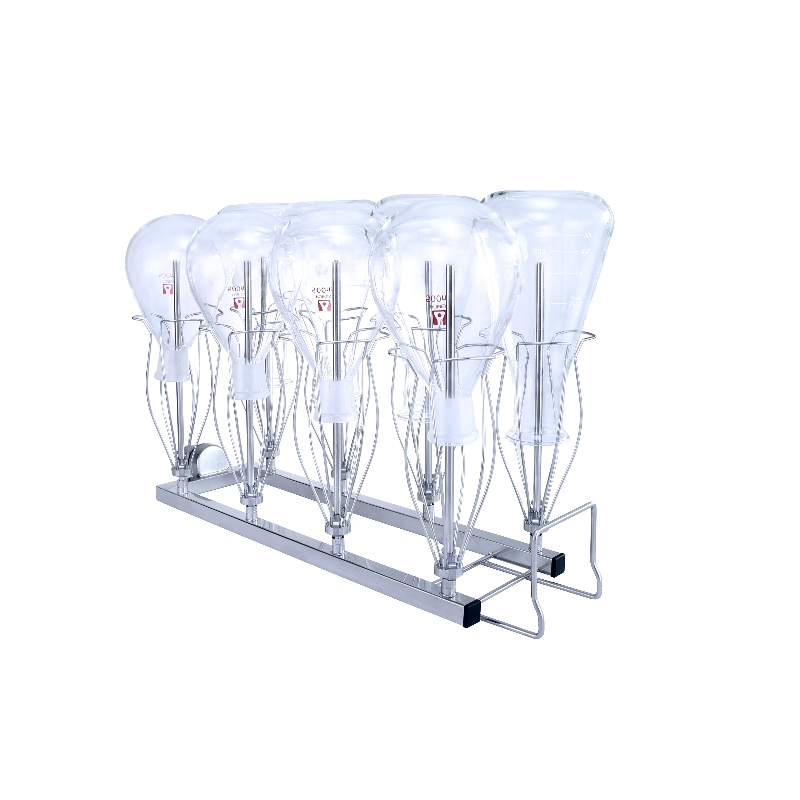
Ideal for smaller-scale labs or narrow-neck glassware.
Available models include:
Features:
(3) A306 Series (3×6 Modules)
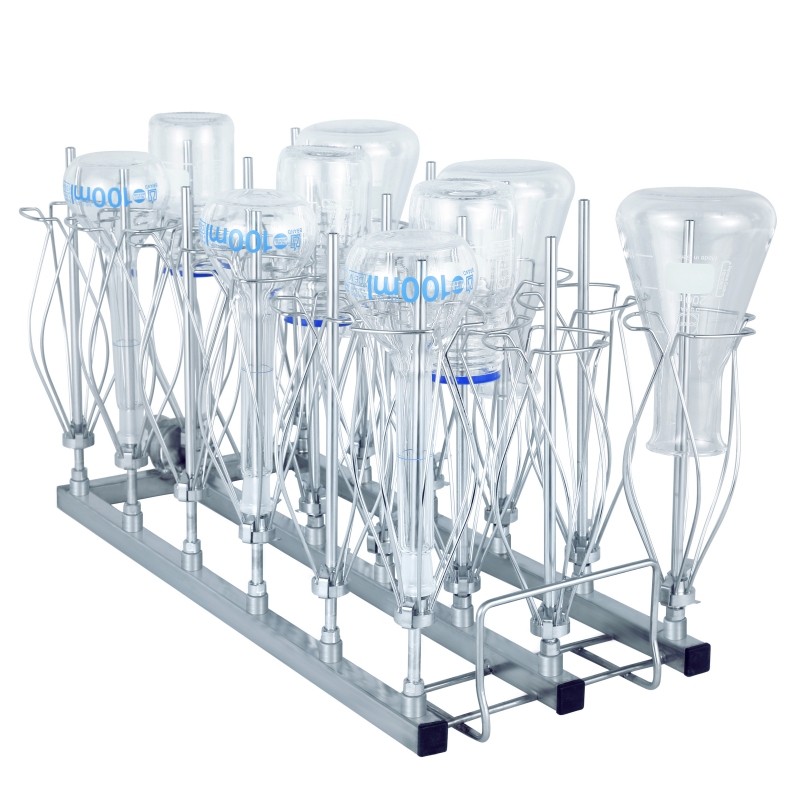
Designed for large laboratories, hospitals, and central washing rooms.
Models include:
Advantages:
(4) Hospital Washer-Disinfector Accessories
Applicable to:
These products meet medical sterilization workflow requirements.
6. How to Store Glassware in the Laboratory
Proper storage prevents contamination and breakage.
Best practices:
Where basket racks help:
Stier’s washing baskets can also be used as temporary drying racks because of their stable structure and spacing.
7. Choosing the Right Accessories for Your Glassware Washer
When selecting accessories, consider:
① Lab size & throughput
Small labs → A204 series
High-volume labs → A306 series
② Type of glassware
Narrow-neck → Injector modules
General-purpose → Rack frames
Large flasks → Customized holders
③ Washer brand compatibility
Stier modules are designed for multi-brand fit.
④ Cleaning requirements
8. Why Choose Stier for Laboratory Glassware Washing Accessories?
Stier is known for:
Stier basket racks and modules help laboratories achieve:
This makes Stier a preferred brand among research labs, universities, pharmaceutical companies, and hospitals.
9. Summary
A proper laboratory washing system is not simply equipment—it is a workflow that ensures data accuracy and experiment safety. By combining:
laboratories can greatly reduce contamination risks..
Disclaimer: This website respects intellectual property rights. If any infringement is found, please contact this website in a timely manner for handling.
Our hours


Public Account



 IPv6 network supported