EN
EN RU
RU

 Industry News
 How Should Global Buyers Evaluate Chinese Manufacturers?
2026-09-11
2026-09-09
2026-09-02
2026-08-28
2026-07-13
2026-04-29

 Current Affairs
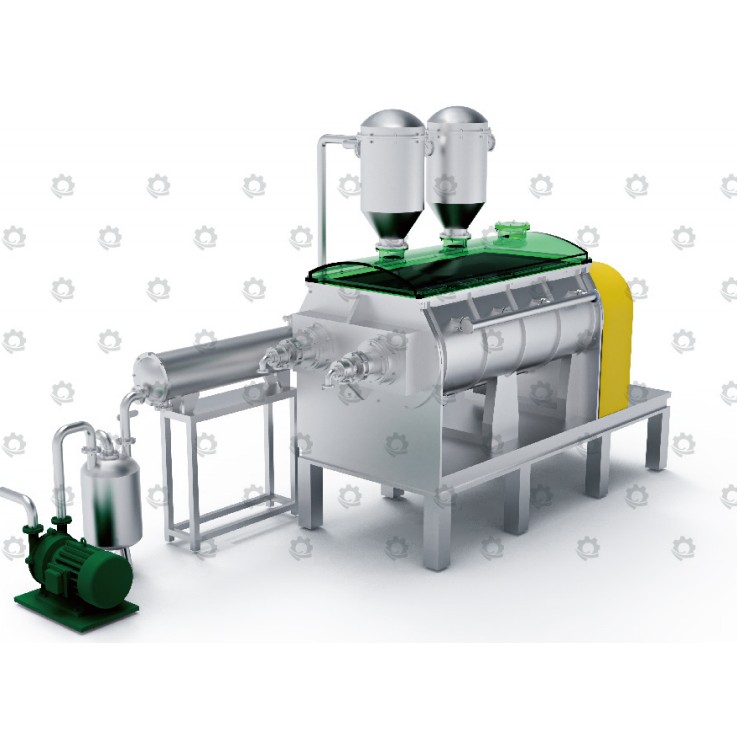
This guide explains what you need to know about vacuum dryers. It covers how they work, their benefits, limitations, uses, and how to choose one.
What Is a Vacuum Dryer?
A vacuum dryer is a machine used in industry. It removes moisture or solvents by using low pressure. This lets water evaporate at lower temperatures. This makes it ideal for:
By lowering the atmospheric pressure inside the chamber, the boiling point of water drops significantly. As a result, you can complete drying without exposing materials to damaging high heat.
How Vacuum Drying Works
1. Reduced Pressure → Lower Boiling Point
Under vacuum, water or solvents evaporate at lower temperatures:
This protects heat-sensitive components and accelerates moisture removal.
2. Step-by-Step Vacuum Drying Process
Step 1: Material Loading
Powder, granules, semi-solids, or liquids are placed into the drying chamber.
Step 2: Vacuum Creation
A vacuum pump removes air, oxygen, and moisture until it reaches the target low-pressure level.
Step 3: Low-Temperature Heating
Heat is applied via shelves, plates, jackets, or internal coils — gently raising the product temperature.
Step 4: Moisture Vaporization
Moisture vaporizes rapidly due to the low boiling point under vacuum.
Step 5: Condensation & Collection
Vapor is condensed and separated from the system, ensuring safe solvent recovery.
Step 6: Drying Completion
The system stops automatically when the final moisture content reaches specification.
Key Benefits of a Vacuum Dryer
1. True Low-Temperature Drying
Ideal for materials that degrade, oxidize, or discolor under high temperatures:
2. Faster Drying Time
Drying cycles can be 30–70% faster than conventional hot-air drying because water evaporates more easily under vacuum.
3. Excellent Protection of Chemical & Physical Properties
Vacuum drying prevents:
4. Efficient Solvent Removal & Recovery
Ethanol, methanol, acetone, and other solvents can be recovered safely with a condenser system.
5. Energy Efficiency
Lower drying temperatures reduce energy consumption, making the process more economical and environmentally friendly.
Limitations of Vacuum Dryers
1. Higher Initial Investment
Vacuum pumps, condensers, automation, and sealing systems increase the upfront cost.
2. Not Suitable for All Materials
Very large, non-uniform or high-moisture blocks may require pre-processing or alternative drying technologies.
3. Skilled Operation Required
Precise control of:
is essential to achieve optimal results.
Applications of Vacuum Dryers
drug-manufacturing & Biotech
Purpose: Prevent degradation, maintain product stability, and ensure GMP compliance.
Food & Agricultural Processing
Purpose: Preserve color, aroma, nutrients, and bio-active components.
Chemical & Fine Chemical Industry
Purpose: Prevent oxidation and safely remove organic solvents.
Environmental Protection
Purpose: Reduce moisture content efficiently and lower disposal cost.
How to Choose the Right Vacuum Dryer
Choosing the wrong type of vacuum dryer leads to poor efficiency, uneven drying, or thermal damage. Below are the six most important selection criteria for engineers and procurement teams.
1. Temperature Sensitivity of the Material
If the material cannot exceed 40–60°C, vacuum drying is typically the safest choice.
2. Solvent Type & Recovery Needs
Materials containing ethanol, methanol, acetone, or other flammable solvents require:
3. Moisture Content (Before & After Drying)
Select the system based on moisture level:
4. Material Form
5. Batch Size & Production Capacity
Larger batch sizes demand:
6. Compliance Requirements
For drug-manufacturing applications:
Conclusion
A vacuum dryer is a useful tool. It dries materials that are sensitive to heat. It also works well for valuable materials and those sensitive to oxygen.
Many industries use vacuum dryers. They work well in drug-manufacturing, food processing, chemicals, and environmental treatment.
These dryers operate at low temperatures. They also have faster drying cycles. They help recover solvents and protect products effectively.
Choosing the right system requires understanding your material, solvent behavior, moisture content, batch size, and compliance requirements. When properly implemented, vacuum drying significantly improves product quality, stability, and production efficiency.
If you work with heat-sensitive materials or solvents, our Vacuum Dryer is a great choice. It offers a stable, low-temperature environment. This protects active ingredients and ensures quick, even drying.
Learn more about the system’s working parameters and configurations here → Vacuum Dryer
Disclaimer: This website respects intellectual property rights. If any infringement is found, please contact this website in a timely manner for handling.
Our hours


Public Account



 IPv6 network supported