LWS Three Phase Decanter Centrifuge: Efficient Oil-Water-Solid Separation
-
What Is a Three Phase Decanter Centrifuge?
-
Key Features of the LWS Model
-
Technical Specifications
-
Main Applications
-
How It Works
-
Benefits & Pain Points Solved
-
Is It Right for Your Industry?
Industrial separation gets complicated when your stream contains solid particles plus two immiscible liquids—think oil, water, and sand from tank-bottom sludge, or fat, water, and solids in food processing. Multi-step settling tanks, chemical demulsifiers, and batch filters can get the job done, but they're slow, chemical-hungry, and hard to scale.
The LWS Three Phase Decanter Centrifuge is built for exactly this scenario: one machine, continuous operation, solid–liquid–liquid separation in a single pass. Below we break down what it is, where it fits, and how to tell if it belongs in your line.
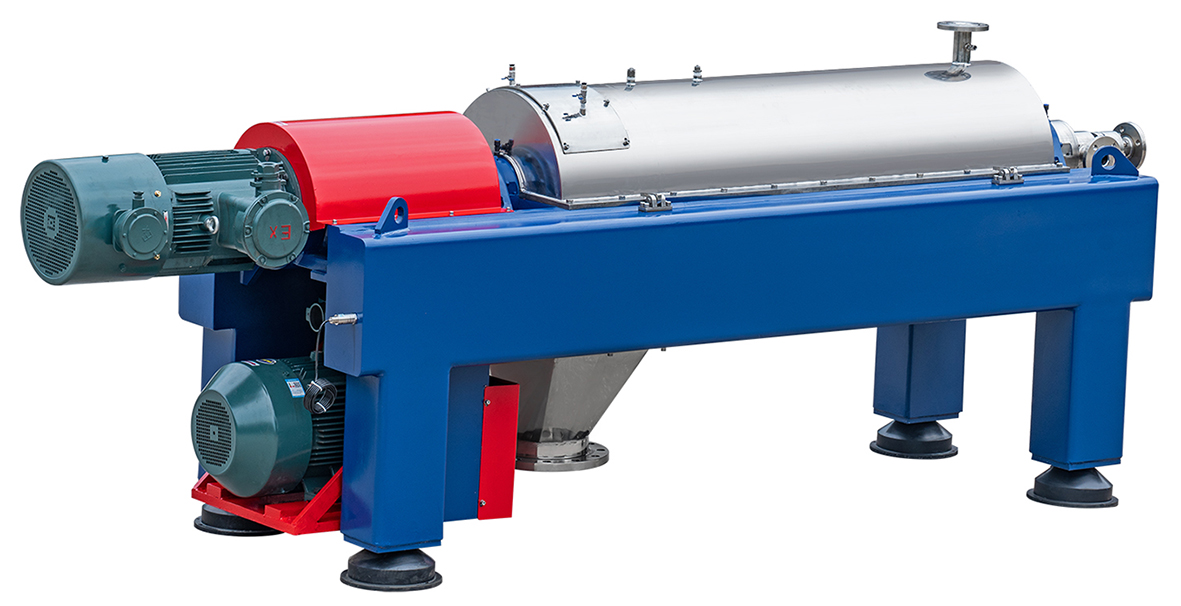
Q1: What Is a Three Phase Decanter Centrifuge?
A Three Phase Decanter Centrifuge is an industrial centrifuge designed for continuous separation of three distinct phases that coexist in a single feed stream:
-
Solid particles (highest density)
-
Two immiscible liquids with different densities (typically oil = light phase, water = heavy phase)
The machine spins a horizontal bowl at high speed, generating centrifugal force thousands of times gravity (typically 2,000–3,000 G depending on bowl diameter). Under that force, solids migrate to the bowl wall, heavy liquid forms an inner layer, and light liquid floats above it—three layers, three discharge paths, one continuous cycle.
vs. Two-Phase: A 2-phase decanter separates onlysolids from liquid. If your stream has oil + water + grit, you need 3-phase—otherwise you'll be adding a secondary separator downstream.
Q2: What Are the Key Features of the LWS Three Phase Decanter Centrifuge?
The LWS series is engineered for continuous, high-solids, variable-feed conditions common in oil sludge, rendering, and wastewater plants.
|
Feature
|
What It Means for You
|
|
High separation efficiency
|
Handles wide density spreads (e.g. oil ≈0.92 / water ≈1.0 / solids >1.1 g/cm³)
|
|
Continuous high-capacity run
|
No batching—feed in, three streams out, 24/7
|
|
Duplex/sus stainless bowl
|
SS2205 or SS316L options for corrosion & wear resistance
|
|
Adjustable process parameters
|
Bowl speed, differential, weir plates tunable per feed
|
|
Adjustable centripetal pump
|
Heavy-phase discharge under pressure, no separate chamber pump needed
|
|
Self-cleaning / CIP-ready
|
Reduces downtime on high-solid feeds
|
Source: LWS series technical documentation, Jiangbei & Sha-cazin spec sheets
Technical Specifications (LWS Series)
|
Model
|
Max Capacity (m³/h)
|
Main Motor (kW)
|
Recovered Oil Purity
|
Solids Moisture
|
|
LWS450
|
10–18
|
45–55
|
≥90%
|
≤50%
|
|
LWS530
|
15–25
|
52–67
|
≥90%
|
≤50%
|
|
LWS650
|
20–35
|
75–120
|
≥90%
|
≤50%
|
Actual throughput varies with solid content, oil/water ratio, and viscosity. Pilot testing is recommended for model selection.
Data aligned with published LWS spec ranges
Q3: What Are the Main Applications?
The LWS three-phase decanter sits at the intersection of any process where oil–water–solid co-exist:
-
Oil & Gas / Oil Sludge – tank-bottom sludge, refinery waste, drilling cuttings: recovers reusable oil, reduces disposal volume
-
Food & Beverage – olive oil, palm oil, fish oil, animal fat rendering: simultaneous de-sludging + de-watering
-
Bio-diesel & Chemical – high-value chemical phase separation, esterification by-product recovery
-
Wastewater Treatment – petrochemical effluent, FOG (fat-oil-grease) interceptors, slaughterhouse runoff
-
Mining & Mineral – coal tar separation, mineral oil recovery from tailings
-
Pharmaceutical / Nutraceutical – fish oil, algae oil purification (where GMP-grade stainless + CIP matter)
Q4: How Does the LWS Three Phase Decanter Centrifuge Work?
Step-by-step inside the bowl:
-
Feed entry – mixed slurry enters via a stationary inlet tube into the rotating scroll conveyor
-
Acceleration – material hits the bowl wall, centrifugal field activates (2,000–3,200 G)
-
Three-layer formation by density:
-
Solids → outer wall, scrolled toward cone & discharged
-
Heavy liquid (water) → inner layer, discharged via centripetal pump
-
Light liquid (oil) → top layer, overflows weir plate
-
Continuous cycle – feed, separate, discharge all happening at full speed, no stopping to unload
The differential gearbox creates a controlled speed difference between bowl and scroll (~2–50 rpm, VFD-adjustable), so solids are conveyed out without re-entrainment.
Q5: Benefits & Pain Points Solved
Industry pain points → LWS answer
|
Pain Point
|
How LWS Addresses It
|
|
Multi-step settling = slow
|
One-pass 3-phase, no secondary separator
|
|
Chemical demulsifier costs
|
Mechanical separation—minimal or zero chemicals
|
|
Batch filters = downtime
|
Continuous operation, VFD-controlled
|
|
Abrasive sludge = wear
|
Duplex stainless + tungsten carbide wear tiles
|
|
Hard to tune for feed swings
|
Adjustable weir + centripetal impeller, live tuning
|
Bottom-line benefits:
-
OPEX down – fewer chemicals, less energy than thermal methods
-
Throughput up – continuous, scales from 10 to 35 m³/h
-
Sustainability – recovered oil = revenue, cleaner water = lower discharge fees
-
Maintenance low – self-cleaning design, CIP-compatible
Q6: How Do I Know if the LWS Is Right for My Industry?
You're a fit if:
-
Your feed is a solid + two immiscible liquids (oil/water/sand, fat/water/protein, etc.)
-
You want to replace multi-tank settling with one continuous unit
-
Solid content is moderate-to-high (the decanter beats disc separators here)
-
You need adjustability—feed composition swings day to day
-
Current separation is costing you in chemicals, labor, or disposal fees
Not sure which LWS model? Send us your feed specs (capacity m³/h, solid %, oil/water ratio, temperature) and we'll size it.
Why Choose LWS
The LWS Three Phase Decanter Centrifuge isn't a generic separator—it's purpose-built for oil–water–solid streams that defeat 2-phase units. With adjustable centripetal pump discharge, duplex-stainless bowl options, and proven deployments from oil-sludge yards to edible-oil refineries, it hits the trio of priorities most plants care about: recovery rate, uptime, and OPEX.
Whether you're de-sludging crude tank bottoms, clarifying rendering fat, or treating FOG-heavy wastewater, the LWS gives you one machine where you used to need two.
 EN
EN RU
RU

 Industry News
 How Should Global Buyers Evaluate Chinese Manufacturers?

 Current Affairs





 IPv6 network supported