Electric Large-Capacity Pipette: The "Precision Steward" for Large-Volume Pipetting in Labs - A Complete FAQ Guide
In biobanks, pharmaceutical R&D, or environmental monitoring laboratories, there is often a need to handle large-volume liquid pipetting tasks ranging from 500μL to 100mL. Manual pipetting is not only time-consuming and labor-intensive but also prone to excessive errors due to hand fatigue. The emergence of the Electric Large-Capacity Pipette has completely addressed this pain point. This article will take a Q&A format to provide you with a comprehensive understanding of this "efficiency tool" in the laboratory.
I. Basic Understanding: What Exactly is an Electric Large-Capacity Pipette?
Q1: What are the core differences between an electric large-capacity pipette and a regular pipette?
An electric large-capacity pipette is an automated instrument specifically designed for large-volume liquid pipetting. Its core differences are reflected in three aspects:
1. Volume Range: Regular pipettes typically have a volume range of 0.1μL to 10mL, while electric large-capacity pipettes usually cover 500μL to 100mL, and some models can be expanded to 200mL, meeting large-volume needs such as serum aliquoting and reagent preparation;
2. Power Mode: It gets rid of the reliance on manual pressing and drives the piston movement through a motor, avoiding pipetting deviations caused by hand fatigue;
3. Function Adaptability: It comes with dedicated programs for liquid dispensing, dilution, mixing, etc. For example, in cell culture reagent preparation, it can complete multiple equal-volume dispensings with one click, whereas a regular pipette requires repeated operations.
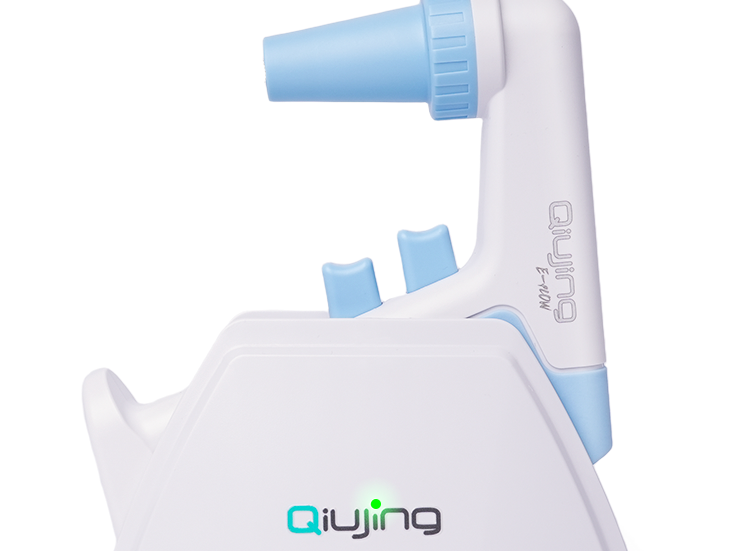
To quickly grasp the core value of this efficient pipetting tool, you can click to view the Electric Large-Capacity Pipette product details.
Q2: Where does the "precision" of electric large-capacity pipettes lie? Is it necessary for ordinary laboratories to be equipped with them?
Its precision stems from double guarantees: first, the core components adopt ceramic or sapphire pistons, combined with precision sealing technology to ensure no liquid adsorption residue; second, the built-in intelligent calibration system can control the error within ±0.5%, which is far better than the ±2% error rate of manual pipetting.
Whether it is necessary to equip depends on the laboratory scenario: if there are scenarios such as batch processing of large-volume samples (e.g., pre-processing of water quality testing samples in CDC), aliquoting of high-value reagents (e.g., antibody reagents), or long-term pipetting operations (e.g., serum preservation in biobanks), it is very necessary. It can not only increase efficiency by 3-5 times but also reduce reagent waste and the cost of experimental repetition caused by human errors.
II. Practical Scenarios: What Laboratory Pain Points Can Electric Large-Capacity Pipettes Solve?
Q3: What is the core role of electric large-capacity pipettes in biobank work?
The most common pain point in biobanks is the "standardized aliquoting of a large number of serum and plasma samples". For example, when 100mL of mixed serum needs to be aliquoted into 50 2mL cryovials, manual operation requires repeated aspiration and dispensing 50 times, taking more than 20 minutes, and it is easy to cause uneven aliquot volume due to hand numbness.
However, with an electric large-capacity pipette, you only need to set the program of "100mL divided into 50 times, 2mL each time", press the start button to complete automatically. The whole process takes 3 minutes, and the liquid volume error of each cryovial does not exceed 0.01mL.
In addition, its anti-cross-contamination design (replaceable tip sleeve + high-temperature sterilizable pipette body) can avoid cross-sample contamination, which is crucial for clinical sample preservation. For specific sample processing adaptation solutions, you can obtain exclusive consultation on the product page.
Q4: How do electric large-capacity pipettes ensure the stability of reagent preparation in pharmaceutical R&D?
Pharmaceutical R&D has extremely high requirements for the "repeatability" of reagent preparation. For example, in the R&D of a certain antibiotic, 10mL of mother liquor needs to be diluted to 100mL with culture medium, and this operation needs to be repeated 20 times a day. The advantages of electric large-capacity pipettes lie in:
1. Memory Function: It can save the dilution program and call it directly for next use, avoiding errors caused by parameter setting every time;
2. Uniform Speed Pipetting: Motor drive ensures constant aspiration and dispensing speed, preventing air bubbles caused by uneven manual operation speed (air bubbles will affect reagent concentration);
3. Data Recording: Some intelligent models can connect to the LIMS system and automatically record the volume and time of each pipetting, meeting GMP compliance requirements.
Q5: Can it handle "complex liquids" such as sewage and soil extracts in environmental monitoring laboratories?
Absolutely. For liquids containing trace impurities such as sewage and soil extracts, electric large-capacity pipettes adopt a design of "anti-clogging tip interface + adjustable aspiration speed": the aspiration speed can be reduced to 1mL/s to avoid impurity impact on the piston; the tip sleeve made of special materials can prevent corrosive liquids from eroding the pipette body. For example, when testing the COD content in sewage, 50mL of sewage samples need to be pipetted, and it can be completed quickly without sample residue, ensuring accurate test results.
III. Operation and Maintenance: How Can Novices Get Started Quickly?
Q6: Are the operation steps of electric large-capacity pipettes complicated? How long does it take for novices to be trained?
The operation is very simple, with only 3 core steps that novices can master in 10 minutes:
1. Install the pipette tip: Select a tip suitable for the volume range (e.g., a 100mL dedicated tip for the 100mL volume range), and gently press the tip interface to complete the installation;
2. Set parameters: Enter the pipetting volume (e.g., "20mL") and times (e.g., "5 times") through the operation panel, and select the "aspiration-dispensing" mode;
3. Start operation: Insert the tip into the liquid, press the start button, the instrument will automatically complete aspiration, and press the start button again after moving to the target container to complete dispensing.
Some brands are also equipped with a Chinese operation interface and voice prompts, which further reduce the difficulty of getting started. Specific operation videos can be viewed on the Electric Large-Capacity Pipette product page.
Q7: How to maintain it in daily use to extend its service life?
There are 4 core maintenance points, and doing these well can extend the service life of the instrument to more than 5 years:
1. Cleaning: After each use, wipe the surface of the pipette body with alcohol swabs. If liquid overflows, disassemble the tip interface and rinse it in time (to prevent liquid from seeping into the motor);
2. Calibration: It is recommended to calibrate once every 3 months. Simple calibration can be carried out with standard weights (please refer to the product manual for specific methods), or you can contact the manufacturer for professional calibration;
3. Battery: For rechargeable models, avoid over-discharging, charge it in time after each use, and replenish the charge once a month when not in use for a long time;
4. Storage: Place it in a dry and light-proof environment, avoiding direct sunlight and high temperature and humidity (e.g., keep away from water baths).
III. Selection Guide: How to Choose the Right Model for Your Laboratory?
Q8: How to choose electric large-capacity pipettes with different volume ranges and brands?
The selection can follow the "3-step matching method":
1. Determine the volume range: Choose according to the maximum pipetting demand. For example, if the daily pipetting volume is 5-50mL, a 5-50mL volume range can be selected; if 100mL needs to be considered, an adjustable volume range of 5-100mL can be chosen;
2. Consider the scenario: If it is used for aseptic operations (e.g., cell rooms), a pipette body that can be autoclaved is required; if it is used for data traceability (e.g., pharmaceutical laboratories), an intelligent model with data storage and networking functions should be selected;
3. Compare configurations: Prioritize models with "anti-dripping design", "battery level reminder" and "auto-sleep" functions, as these details can improve the user experience.
If you are still unsure about the selection, you can submit your laboratory needs on the **product page** to get one-on-one selection suggestions.
IV. Conclusion: Why Become a Lab Favorite?
From "manual repetition" to "automatic precision", electric large-capacity pipettes not only solve the efficiency and accuracy problems of large-volume pipetting but also reduce the work intensity of laboratory personnel through intelligent design, adapting to multiple scenarios such as biobanks, pharmaceutical R&D, and environmental monitoring. For laboratories pursuing experimental standardization and improved work efficiency, it is no longer an "optional product" but a "must-have product".
To learn more about the specific models, operation skills, or procurement plans of electric large-capacity pipettes, please click the Electric Large-Capacity Pipette product page to obtain more professional information.
Disclaimer: This website respects intellectual property rights. If any infringement is found, please contact this website in a timely manner for handling
December 12, 2025
712
 EN
EN RU
RU


 Industry News
 How Should Global Buyers Evaluate Chinese Manufacturers?

 Current Affairs








 IPv6 network supported