EN
EN RU
RU

 Industry News
 How Should Global Buyers Evaluate Chinese Manufacturers?
2026-09-11
2026-09-09
2026-09-02
2026-08-28
2026-07-13
2026-04-29

 Current Affairs
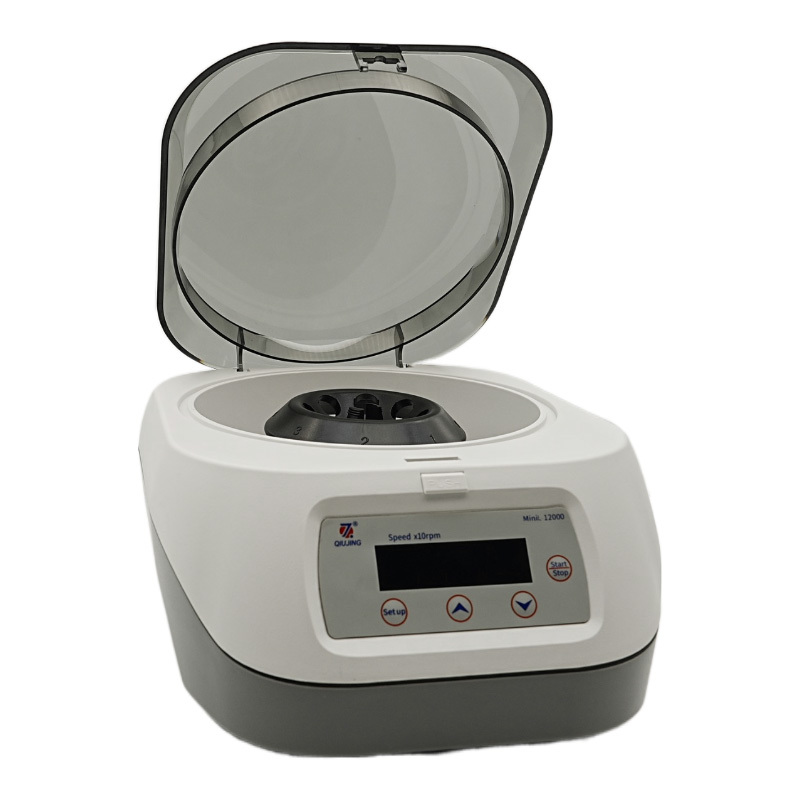
In scenarios such as molecular biology, clinical testing, and microbiological experiments, there is often a need for centrifugation of small-volume samples in 1.5mL centrifuge tubes, PCR tubes, etc.—for example, separating supernatants after nucleic acid extraction, rapid stratification of serum samples, and concentration of microplate well solutions. Mini Centrifuge has become an "essential tool" for such experiments due to its compact size, efficient performance, and user-friendly operation. This article comprehensively analyzes this "small yet powerful" centrifugal equipment from core advantages, application scenarios to technical details.
I. Basic Understanding: What is a Mini Centrifuge?
Q1: What are the core differences between a mini centrifuge and a conventional large-capacity centrifuge?
The core differences between the two focus on "application scenarios" and "performance focus", specifically reflected in three aspects:
1. Sample Capacity: Conventional centrifuges are compatible with large-capacity containers such as 50mL centrifuge tubes and centrifuge bottles. Mini centrifuges are specially designed for small-volume consumables such as 1.5mL/2mL centrifuge tubes, PCR tubes, and 8-tube strips. Some models support microplate adaptation;
2. Size and Portability: Mini centrifuges have a compact body (usually dimensions <20cm×20cm×15cm) and weigh only 2-5kg. They can be directly placed on a clean bench or in the corner of an experimental table without occupying dedicated laboratory space;
3. Centrifugation Requirements: Conventional centrifuges focus on batch processing with high speed and large centrifugal force, while mini centrifuges focus on "fast, accurate, and convenient" centrifugation of small-volume samples to meet immediate experimental needs (such as sample mixing and centrifugation before PCR reactions).
To quickly match your laboratory's small-volume centrifugation needs, click to view the Mini Centrifuge Product Details.
Q2: What are the core advantages of a mini centrifuge? Is it necessary for ordinary laboratories?
The core advantages of a mini centrifuge can be summarized as "small, fast, stable, and convenient":
Whether it is necessary to equip one depends on the experimental scenario: If the laboratory often conducts small-volume sample operations such as nucleic acid extraction, PCR experiments, serum micro-sample processing, and microplate centrifugation, a mini centrifuge is a must—it can greatly improve experimental efficiency and avoid problems such as long waiting time and cumbersome operation when using large-capacity centrifuges. Even for comprehensive laboratories, equipping one can serve as an "emergency tool" to meet immediate centrifugation needs.
II. Core Technology: What Ensures the Performance of a Mini Centrifuge?
Q3: How does a mini centrifuge ensure stable speed without being affected by voltage or load?
This benefits from its advanced and reliable PI high-frequency full-range wide power supply control scheme—this scheme is compatible with AC100-240V/50/60Hz globally universal input power supply, and can accurately control voltage, current, speed, and relative centrifugal force (RCF). Whether the laboratory voltage fluctuates or the load of centrifuged samples changes (such as slight differences in liquid volume in different tubes), it can maintain a constant speed to ensure consistent centrifugation results.
For example, in nucleic acid extraction experiments, stable speed can avoid insufficient nucleic acid precipitation caused by uneven centrifugal force, ensuring the accuracy of subsequent PCR amplification. For detailed technical information about the power supply control, you can obtain professional analysis on theMini Centrifuge Product Page.
Q4: Is it convenient to replace the rotor? What are the advantages of the rotor design of a mini centrifuge?
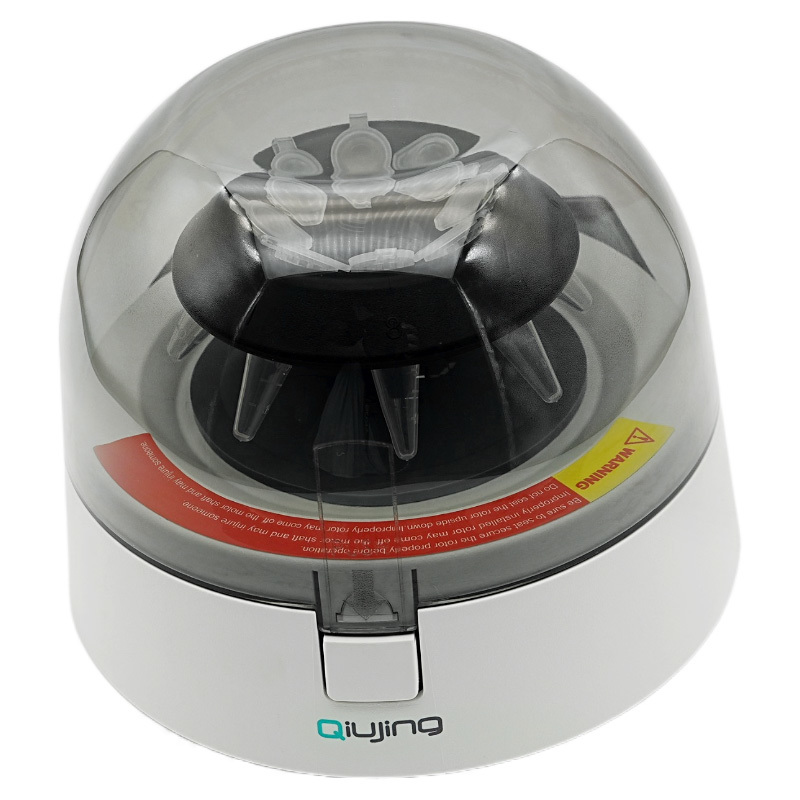
The mini centrifuge adopts a unique rotor head snap-on installation design. No tools are required, and the rotor can be easily installed and removed with just hand operation—experimenters can quickly replace the corresponding rotor according to the type of sample consumables (such as 1.5mL centrifuge tubes, PCR 8-tube strips, microplates). The entire process takes only 3 seconds, greatly saving experimental preparation time.
Compared with the cumbersome operation of traditional centrifuges that require wrenches to remove the rotor, this design is especially suitable for scenarios where multiple types of small-volume samples are processed alternately (such as centrifuging single-tube samples and 8-tube strip samples at the same time).
Q5: What is the stability and noise performance of a mini centrifuge during operation?
Its stable operation and low-noise advantages come from two major designs:
1. Equipped with a high-efficiency DC permanent magnet motor, combined with rubber shock-absorbing materials, it can effectively absorb vibrations during operation, ensuring stable operation without shaking and avoiding the impact of vibration on centrifugation results;
2. The rotating space adopts a 360° dead-angle-free design, with low wind resistance and low temperature rise. It operates extremely quietly with a noise level <42dB (equivalent to the volume of soft speech in a daily indoor environment). Even when operating at close range inside a clean bench, it will not interfere with the experimenter's concentration.
Q6: Why can the acceleration/deceleration rate of a mini centrifuge improve experimental efficiency?
Its faster acceleration/deceleration rate is the key to improving the efficiency of small-volume centrifugation:
For example, in PCR experiments, samples need to be centrifuged quickly after pipetting to remove air bubbles and concentrate the samples at the bottom of the tube. A mini centrifuge can complete centrifugation in only about 10 seconds from start to finish, while a traditional centrifuge takes 1-2 minutes just for warm-up, greatly shortening the experimental cycle.
Q7: What is the practical role of high corrosion resistance and high-temperature sterilization functions?
The main body and rotor of the mini centrifuge are made of high-strength materials, which can resist corrosion from common chemical substances in experiments such as alcohol, acetone, and nucleic acid extraction reagents, prolonging the service life of the instrument. At the same time, the rotor has a high-temperature sterilization function and can be sterilized by autoclaving or high-temperature baking (specific sterilization methods should refer to the product instructions).
This advantage is particularly important in scenarios such as microbiological experiments and clinical sample processing—it can effectively avoid cross-contamination between samples, ensure the accuracy of experimental results, and reduce the difficulty of instrument cleaning and maintenance. To learn about the specific sterilization temperature and corrosion-resistant material details of the rotor, you can check the Mini Centrifuge Product Parameters.
Need a quiet and stable laboratory environment? Click to view core parameter details of the Cyclone Series Mini Centrifuge!
III. Application Scenarios: What Pain Points Can a Mini Centrifuge Solve?
Q8: What is the core role of a mini centrifuge in molecular biology experiments?
In experiments such as nucleic acid extraction, PCR amplification, and gene sequencing, the mini centrifuge is an indispensable "auxiliary tool":
Q9: What are the applications of mini centrifuges in clinical testing and microbiological experiments?
IV. Operation and Maintenance: Easy to Master for Beginners?
Q10: Is a mini centrifuge complicated to operate? How can beginners master it quickly?
The operation is extremely simple, with only 3 core steps that beginners can master in 1 minute:
1. Install the Rotor: Select the corresponding rotor according to the type of sample consumables and install it in place with the snap-on design;
2. Place Samples: Place the sample-containing centrifuge tubes (or other consumables) symmetrically into the rotor holes to ensure weight balance (if the number of samples is odd, an empty tube can be placed for balance);
3. Start Centrifugation: Close the lid, press the start button, and the instrument will automatically accelerate to the set speed; after centrifugation is completed, press the stop button, and open the lid to take out the samples after the rotor has completely stopped.
Some intelligent models also have functions such as speed adjustment and timing, with consistent operation logic and no need for complicated training. Detailed operation videos can be viewed on the Mini Centrifuge Product Page.
Q11: What should be paid attention to in daily maintenance? How to extend the instrument's service life?
Do a good job in 4 maintenance points, and the service life of the instrument can be extended to more than 5 years:
1. Cleaning and Sterilization: After each use, wipe the rotor and the inner side of the lid with alcohol swabs. If there is reagent residue, wipe it with clean water in time and then sterilize it to avoid material corrosion;
2. Balance Operation: When centrifuging, ensure that the sample tubes are placed symmetrically and the weight is balanced to avoid motor damage or excessive vibration of the body due to imbalance;
3. Rotor Maintenance: Regularly check whether the rotor snap is loose. If the rotor has cracks, corrosion, etc., stop using it immediately and replace it; after sterilization of the high-temperature-resistant rotor, it must be cooled to room temperature before installation and use;
4. Storage Environment: Place it in a dry, ventilated environment free of corrosive gases, avoid direct sunlight and high temperature and humidity, and unplug the power supply when not in use for a long time.
V. Selection Guide: How to Choose a Suitable Mini Centrifuge?
Q12: How to select different types of mini centrifuges?
Follow the principle of "scenario adaptation + functional needs" and select the right model in 3 steps:
1. Check Rotor Adaptation: Choose according to commonly used consumables. If it is mainly 1.5mL/2mL centrifuge tubes and PCR tubes, select the standard rotor model; if microplate processing is required, select the microplate-specific rotor model;
2. Check Speed and Centrifugal Force: Conventional experiments can meet the needs by selecting models with a speed ≥10000rpm and centrifugal force ≥12000×g; for special scenarios such as centrifugal concentration, models with higher speeds can be selected;
3. Select Functional Configuration: Basic models meet conventional centrifugation needs, while intelligent models have functions such as timing, speed adjustment, and lid-opening protection (such as automatic stop when the lid is opened during centrifugation), which are suitable for scenarios with high requirements for operational safety and accuracy.
Not sure which model is suitable for your laboratory? You can submit your experimental needs on the Mini Centrifuge Product Page to get one-on-one selection suggestions.
VI. Summary: Core Value of Mini Centrifuge
The core value of the mini centrifuge lies in solving the "immediacy" and "accuracy" needs of small-volume sample centrifugation with its "compact size + efficient performance + convenient operation". It requires no complicated operation and no large space occupation, but can greatly improve experimental efficiency and avoid human errors in scenarios such as nucleic acid extraction, PCR experiments, and clinical testing. It is an indispensable "small yet powerful" tool in modern laboratories.
To learn more about the speed parameters, rotor types, sterilization methods and other detailed information of specific models, or to obtain procurement plans, please click the Mini Centrifuge Product Page to get more professional support.
Want to experience extreme acceleration efficiency? Click to unlock core parameters of the Whirlwind Series Mini Centrifuge!
Disclaimer: This website respects intellectual property rights. If any infringement is found, please contact this website in a timely manner for handling.
Our hours


Public Account



 IPv6 network supported