Stability Chambers Explained: Core Concepts, Working Principles, and Complete ICH Condition Overview
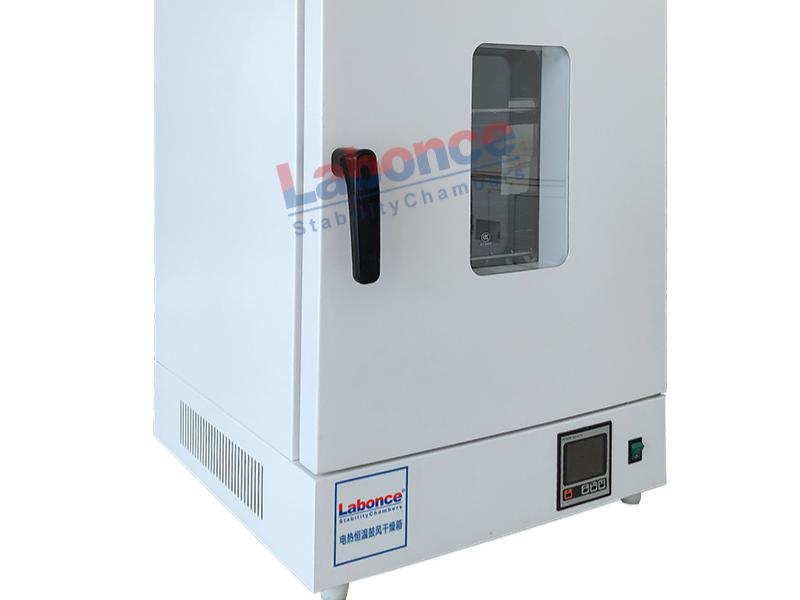
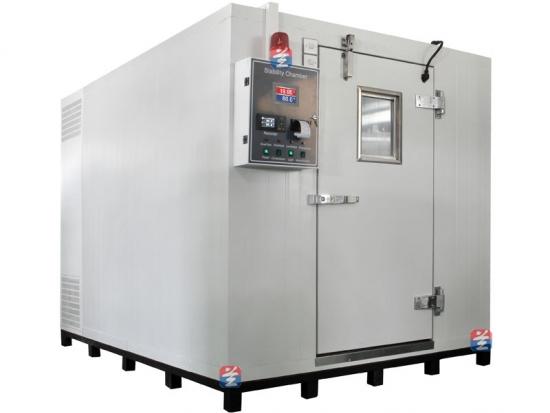
SECTION 1 — Introduction: What Is a Stability Chamber?   A Stability Chamber, also known as a Stability Testing Chamber, is a controlled environmental testing device designed to maintain precise temperature, humidity, and sometimes light conditions to simulate real-world storage environments. These chambers are widely used in:   Pharmaceuticals Biotechnology Cosmetics Medical devices Food and nutritional products Packaging materials research Electronics components aging tests   In simple terms:  A stability chamber creates a stable “mini-environment” to study how a product behaves over time.   Whether you are testing shelf life, degradation rate, packaging compatibility, formulation stability, or stress behavior, the stability chamber is a scientific workhorse that ensures regulatory compliance and repeatable results.    Related Articles:Walk-In Stability Chambers: Critical Role in Pharma Supply Chain   1.1 Why Stability Testing Matters   Every product undergoes some form of environmental stress during its lifecycle:   Transportation Storage in warehouses Changes in climate Exposure to heat, humidity, or light   A stability chamber helps manufacturers understand:   How long their product will last How humidity affects degradation What temperature causes failure How packaging interacts with formulation   Without stability chambers, industries would rely on guesswork rather than data-driven decisions.   1.2 Stability Chamber vs. Climate Chamber: Are They the Same?   They are similar but not identical. Feature Stability Chamber Climate Chamber Primary purpose Long-term stability testing Broad environmental simulation Focus Precision, uniformity, long-run performance Flexibility, wider temp/rH ranges Typical users Pharma, cosmetics Electronics, materials, automotive   A stability chamber prioritizes accuracy and compliance, whereas a climate chamber prioritizes flexibility.   SECTION 2 — How a Stability Chamber Works (The Full Working Principle Explained)   A stability chamber is essentially a high-precision environmental control system that uses sensors, actuators, refrigeration components, heaters, humidifiers, and software algorithms to maintain constant conditions.   Below is the simplified working logic.   2.1 Key Components in a Stability Chamber   1.Refrigeration system   Compressor Evaporator coil Condenser Expansion valve   2.Heating system   Stainless-steel heaters PID-controlled heat modulation   3.Humidity control system   Steam generator / boiler Ultrasonic humidifier (some models) Dehumidification via cooling coil   4.Air circulation system   Motors Centrifugal fans Air baffles for uniformity   5.Sensors   Temperature sensors (PT100, thermocouples) RH sensors (capacitive type)   6.Controller   PID / PLC-based microprocessor Touchscreen HMI Alarm, data logging, trend charts   2.2 The Core Working Principle   The stability chamber works based on continuous feedback control, meaning:   Sensors read the actual condition. Controller compares it to the set value (SV). Controller activates heating/cooling/humidification to correct deviation. Fans mix the air for uniform distribution. The cycle repeats instantly and continuously.   This feedback loop ensures:   Temperature uniformity: ±0.5°C Humidity uniformity: ±3% RH Minimum overshoot Continuous accuracy over thousands of hours   2.3 Temperature Control Explained   Temperature is controlled using:   Refrigeration system for cooling Electric heaters for heating   To avoid overshoot (especially critical in ICH stability tests), modern chambers use:   SSR (solid-state relay) PID control Proportional heating VFD-controlled compressors (in premium models)   2.4 Humidity Control Explained   Humidity is achieved via:   Humidification   Steam generator produces hot vapor Injected into the chamber via air circulation   Dehumidification   Cooling coil condenses excess moisture Moisture is drained out via condensate tube   2.5 Lighting System (For Photostability Chambers)   In photostability chambers, special lights are added:   UV-A lamps (for photodegradation) Visible light lamps (400–700 nm)   These simulate real-world exposure to daylight.   Standards used:   ICH Q1B (Light Exposure Requirements)   2.6 Achieving Uniformity: Why It's Hard   A stability chamber must keep all points inside the chamber identical. Uniformity must stay consistent even when the chamber is fully loaded.   Manufacturers achieve uniformity using:   Multi-duct air distribution Back-to-front airflow Precision fans Thermal-insulation wall design Smooth interior airflow paths Anti-hotspot engineering   This is why high-quality chambers cost more.   SECTION 3 — Types of Stability Chambers   Not all stability chambers are identical. Here are the most common types:   3.1 Reach-in Stability Chamber   Small to medium size (100L–1,500L) Cabinet-style Used in QC labs, R&D centers   Most common & widely used type   3.2 Walk-in Stability Chamber   Room-sized (10 m³ – 200 m³) Used for mass stability studies Typically for pharma production-level testing   Walk-in chambers require:   Seamless insulation panels Floor load-bearing Dedicated HVAC systems   3.3 Photostability Chamber   Specialized chamber designed for:   UV exposure Visible light exposure   Used in:   Pharmaceutical photodegradation studies Packaging UV-resistance tests   3.4 ICH Stability Chamber   Designed specifically to meet:   ICH Q1A (R2) WHO stability testing guidelines FDA cGMP requirements   These chambers guarantee compliance with:   Long-term Accelerated Intermediate Stress conditions   3.5 Environmental / Climatic Chamber (Broader Category)   Some manufacturers combine multiple functions:   Low-temperature Ultra-low humidity Rapid cycling   But these are not optimized for ICH long-term testing.   SECTION 4 — Global Standards Governing Stability Chambers   4.1 ICH Q1A(R2) — The Most Important Standard   ICH Q1A defines:   Long-Term Testing   25°C / 60% RH 30°C / 65% RH   Intermediate Testing   30°C / 65% RH   Accelerated Testing   40°C / 75% RH   These are the mandatory setpoints a pharmaceutical stability chamber must support.   Chambers must ensure:   Uniformity Recovery time < 45 minutes Stability even with full load   4.2 ICH Q1B — Photostability Testing Requirements   For light stability testing:   UV-A energy ≥ 200 Wh/m² Visible light ≥ 1.2 million lux hours   4.3 WHO Stability Testing Standards   WHO TRS 953 Annex 2 defines zones based on humidity/temperature:   Zone Conditions I 21°C / 45% II 25°C / 60% III 30°C / 35% IVa 30°C / 65% IVb 30°C / 75%   4.4 FDA Regulations   FDA 21 CFR Part 11 (if data logging is included):   Electronic signatures Audit trail Secure data storage   4.5 GMP Compliance Requirements   A stability chamber must support:   IQ: Installation Qualification OQ: Operational Qualification PQ: Performance Qualification   4.6 ISO Requirements   ISO 17025 (calibration laboratories) ISO 9001 (quality management)   5. Types of Stability Chambers (Stability Chamber Categories Explained)   A stability chamber is not a single standardized device—manufacturers build multiple models to meet different industry needs. Understanding each type is essential for choosing the right system for pharmaceutical, food, cosmetic, or material testing work.   Related Articles:How to Choose the Right Walk-In Stability Chamber: 7 Key Factors to Consider Before Purchase   Below is an in-depth breakdown of all major stability chamber categories used in regulated industries.   5.1 Walk-In Stability Chambers   Walk-in chambers are large, room-sized systems designed for long-term and high-volume stability studies.   Related Articles:Pharmaceutical Stability Test Chamber: Verification and Maintenance of Temperature Uniformity   Key Features   Modular or prefabricated room structure Temperature range: 10°C–50°C Humidity range: 20%–90% RH Support for multiple storage racks and heavy sample load Precision environmental control with high uniformity   Best For   Large pharmaceutical manufacturers Long-term stability studies (ICH Q1A: 25°C/60% RH, 30°C/65% RH) High-volume batch testing   Advantages   Massive usable volume High reliability Low per-sample cost   Disadvantages   Higher initial investment Requires special room conditions and installation planning   5.2 Reach-In Stability Chambers   These are the most common stability chambers—essentially “cabinet-style” units you can place in any laboratory.   Key Features   Compact footprint One to three internal shelves Digital PID controller Energy-efficient refrigeration   Best For   R&D labs Pilot-scale stability studies Daily QC environmental tests   Advantages   Lower cost Easy installation & maintenance Ideal for small/medium sample volume   Disadvantages   Limited internal capacity compared to walk-in chambers   5.3 Accelerated Stability Test Chambers   Used when you need to artificially speed up degradation to predict product shelf life.   Standard ICH Conditions   40°C ± 2°C / 75% RH ± 5% RH   Applications   Accelerated aging Forced degradation Pharmaceutical stability prediction   Why They Matter   ICH requires accelerated data as part of global drug registration. These chambers support faster decision-making during drug development.   5.4 Photostability Chambers   These chambers simulate controlled lighting conditions to test product sensitivity to:   UV radiation   Visible light   Used For   Pharmaceutical photostability tests Packaging material studies Food color stability   Compliant with:   ICH Q1B Photostability Testing guidelines   Disclaimer: This website respects intellectual property rights. If any infringement is found, please contact this website in a timely manner for handling.
November 25, 2025 1205
1 2 3 4 5 6 7 8 9 10 11

Home

Products

About

Contact